How to Choose the Right Scientific Laboratory Equipment for Your Needs?
Choosing the right Scientific Laboratory Equipment is crucial for any research. The equipment you select can greatly impact the quality of your work. Each lab has unique needs that vary based on research focus and goals. Identifying suitable equipment may seem straightforward, but it involves several considerations.
When exploring options, think about types of experiments you'll conduct. Will you need precision tools, or more general equipment? What about safety features? Many laboratories overlook this aspect, prioritizing function over safety. This could lead to regrettable consequences.
Budget is another important factor. While high-end equipment may seem appealing, it isn't always necessary. Sometimes, a simpler tool can yield accurate results without breaking the bank. Make a list of essential items. Reflect on which pieces are truly necessary for your specialized tasks. Understanding these elements will guide you in selecting the best Scientific Laboratory Equipment for your needs.
Understanding Your Research Needs and Goals
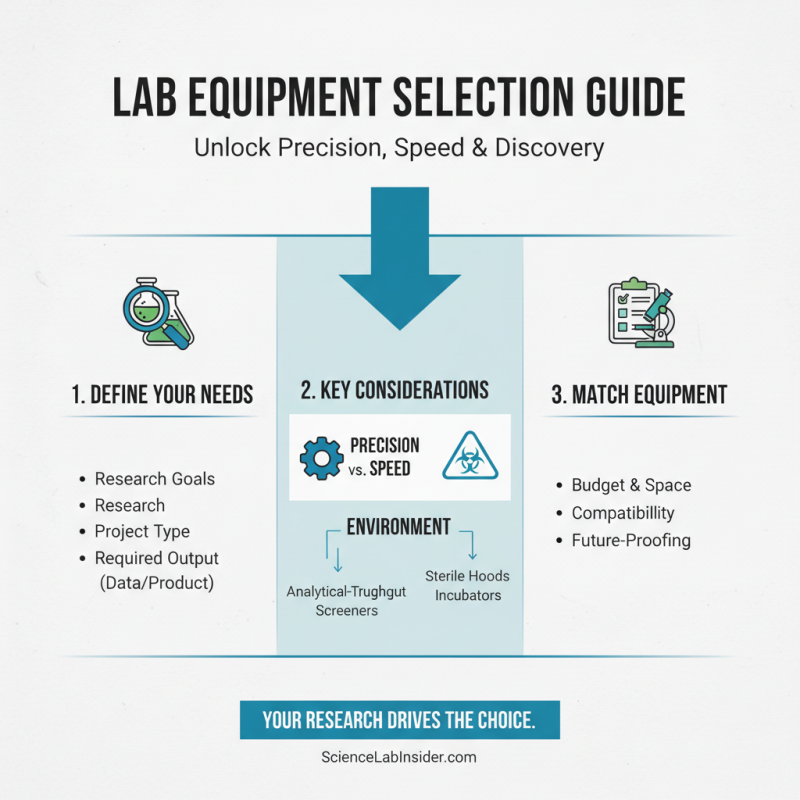
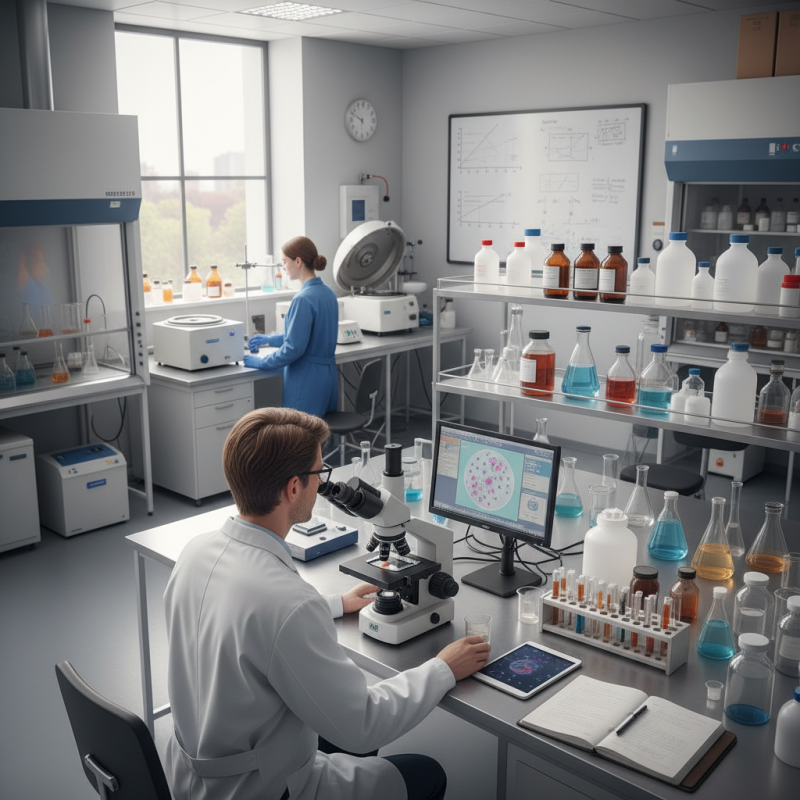
Choosing the right scientific laboratory equipment begins with understanding your unique research needs and goals. Every project has specific requirements. Determining these needs helps narrow down the options. For instance, do you require precision or speed? Will your research demand a sterile environment? These questions guide your choices.
Next, consider the scale of your experiments. Small-scale projects may only need basic tools, while larger studies might demand advanced apparatus. Be honest about your budget too. Cutting corners can lead to significant issues later. It's crucial to balance quality and affordability. Reflect on your long-term goals. Are these tools versatile for future projects? If not, investing now may save costs later.
Lastly, consult peers or mentors. They can share experiences about their equipment choices. Sometimes, firsthand insights reveal details you might not consider. It's easy to overlook specific functionalities or maintenance needs. A piece of equipment's performance under varying conditions is often a key factor. Engaging in discussions might also illuminate potential pitfalls or advantages you hadn’t considered.
Assessing the Budget for Laboratory Equipment Purchase
When planning to purchase laboratory equipment, budgeting is crucial. First, list essential items. This may include microscopes, centrifuges, or incubators. Each piece of equipment has a price range. Research before making decisions. Consider both new and refurbished options. Sometimes, refurbished items are just as effective, but cost significantly less.
Evaluate your needs carefully. Are you starting a new project or upgrading? Each scenario requires different investments. Don’t rush this step. Assess long-term needs versus short-term ones. Can you share equipment with other labs? Collaboration could save money.
Keep in mind ongoing costs. Maintenance, repairs, and consumables add up quickly. Some equipment needs regular calibration. Factor these expenses into your budget. It's easy to overlook them. Be realistic with your financial limits. Creating a flexible budget might allow adjustment as you learn more.
Laboratory Equipment Budget Allocation
Evaluating Different Types of Laboratory Equipment Available
When evaluating different types of laboratory equipment, consider your specific research needs. A study from the Laboratory Equipment industry indicates that over 50% of researchers find that the wrong equipment hinders their experiments. The right equipment can dramatically enhance productivity.
Analyzing the available options is crucial. For instance, optical microscopes are essential for cellular studies. However, incorrect settings can lead to poor results. Similarly, analytical balances are vital for precise measurements, yet not all models offer the same accuracy. A 2022 report highlighted that nearly 30% of lab managers regretted their balance choices due to inaccuracy.
Investing in high-quality equipment is key, but budget constraints can complicate decisions. The market offers a wide range, which often results in overwhelming choices. Many labs report feeling uncertain about their selections. Prioritizing your laboratory's unique requirements can mitigate these issues. Conduct thorough research, and gather feedback from peers to make informed choices.
How to Choose the Right Scientific Laboratory Equipment for Your Needs? - Evaluating Different Types of Laboratory Equipment Available
| Equipment Type |
Purpose |
Key Features |
Price Range |
Considerations |
| Microscope |
To observe small objects |
High magnification, adjustable focus |
$150 - $3000 |
Light source, portability |
| Pipette |
To transfer liquids |
Adjustable volume, ergonomic design |
$15 - $200 |
Volume accuracy, maintenance |
| Centrifuge |
To separate substances based on density |
Variable speed settings, safety lid |
$300 - $5000 |
Capacity, noise level |
| Spectrophotometer |
To measure light absorbance |
Wide wavelength range, user-friendly interface |
$500 - $25000 |
Calibration, sample size |
| Incubator |
To maintain optimal temperature for growth |
Temperature control, humidity settings |
$300 - $7000 |
Size, energy efficiency |
Considering Equipment Quality, Brand, and Manufacturer Reputation
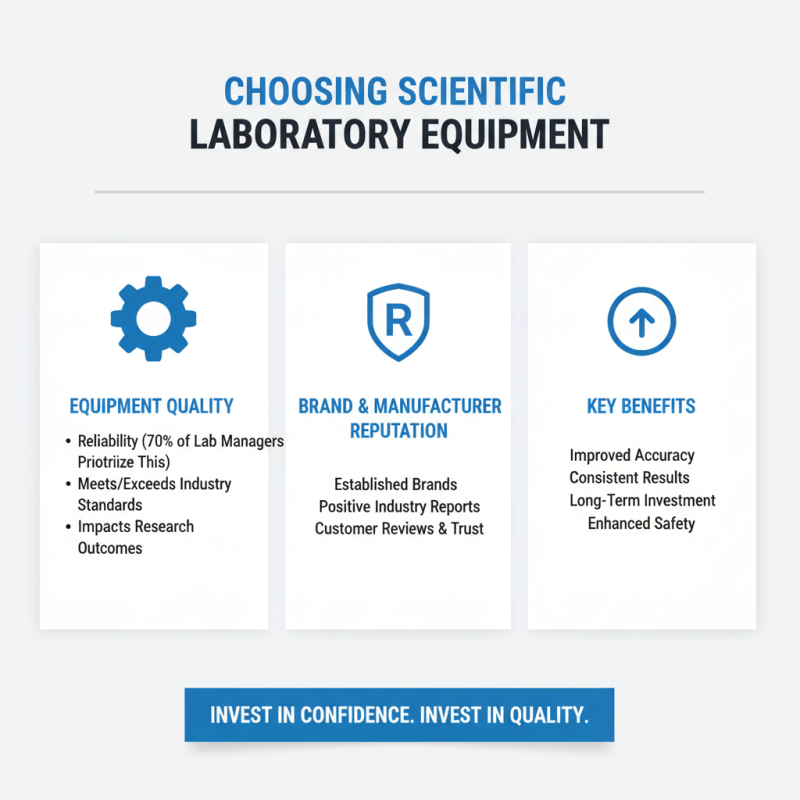
Choosing the right scientific laboratory equipment involves evaluating equipment quality, brand, and manufacturer reputation. According to industry reports, 70% of lab managers prioritize equipment reliability in their decision-making process. Quality equipment can significantly affect your research outcomes. It is essential to invest in goods that meet or exceed standards set by recognized authorities.
Brand reputation is another crucial factor. A well-regarded brand often indicates a history of compliance and customer satisfaction. Reports suggest that 65% of scientists prefer brands that have a proven track record. However, maintaining quality can fluctuate. Some brands may excel in certain equipment types while falling short in others. It's vital to conduct thorough research and read reviews, as specifications alone may not tell the whole story.
Manufacturer reputation deserves equal attention. Some companies may have innovative products but lack robust support services. According to a survey by the Scientific Equipment Association, 50% of lab users have experienced issues due to poor customer service. This indicates that quality isn’t just about the product. Proper maintenance and support are equally important. It's a fine balance to achieve, necessitating careful consideration and reflection.
Exploring Rental and Used Equipment Options for Cost Savings
When considering laboratory equipment, rental and used options often offer significant cost savings. According to a recent report by Lab Manager, nearly 62% of laboratories confront budget constraints. This leads many to explore alternative solutions. Renting equipment can reduce upfront costs by 30% to 50%. This option is particularly beneficial for short-term projects or specialized machinery.
However, the quality of rented and used equipment can vary. It's crucial to inspect items thoroughly. Some laboratories report issues with calibration or maintenance when choosing second-hand tools. A study from Scientific Equipment Reports indicated that 45% of users encountered performance discrepancies. These challenges may affect experimental outcomes negatively.
Still, many laboratories find the trade-offs worthwhile. For instance, a well-maintained used microscope can still provide high-quality images, essential for research. Understanding the potential pitfalls helps laboratories make informed choices. Balancing budget constraints with the need for reliable equipment remains an ongoing challenge in the scientific community.