How to Choose the Best Leather Recliner Sofa Set
Choosing a Leather Recliner Sofa Set means balancing comfort, room size, materials, and everyday use. A sofa may look inviting in a showroom, yet feel too deep or firm at home. Measure the available space, including clearance behind and in front of each reclining seat. Check doorways and hallways, too. Small details matter.
Leather can vary in feel, appearance, and care needs. Ask whether the upholstery is full-grain, top-grain, split leather, or a leather-match combination. These labels describe different materials, so compare product specifications rather than relying on a broad “genuine leather” claim. Look closely at seams, cushion support, and the frame. A sturdy mechanism should operate smoothly, without awkward effort or unusual noise. Try every seat if possible. Comfort is personal.
Think about who will use the set and how often. A family room may need easy-to-clean surfaces and durable construction, while a smaller space might suit a compact sofa with wall-hugging recliners. Check the weight capacity, warranty terms, delivery requirements, and care instructions before buying. These facts help you compare options with fewer surprises. Still, no checklist can predict exactly how a sofa will feel after months of use. That part deserves honest thought. In the sections ahead, we’ll examine the features that matter, the trade-offs worth noticing, and practical ways to choose a set that suits your home rather than just the showroom.
Measure Room and Recliner Clearances Before Comparing Sofa Sets
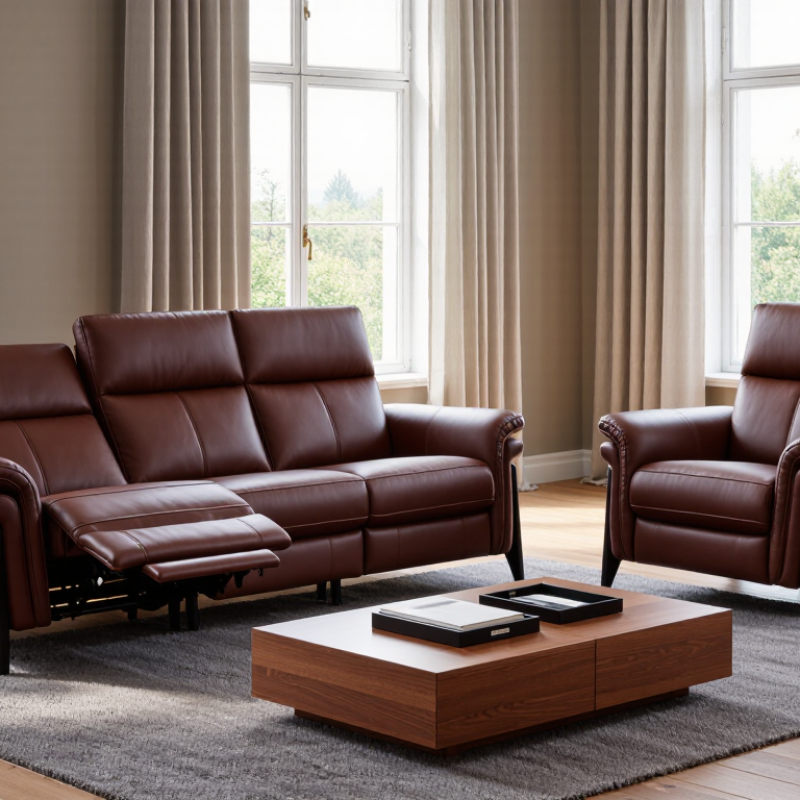
Measure the room before comparing leather recliner sofa sets. Record each wall, doorway, hallway, and stair turn the sofa must pass through. Then check the fully reclined depth in the product specifications, not just the upright depth. Add space for the footrest and a walking route; a sofa that fits on paper can still block a cabinet or door. Small difference. Big problem. The U.S. Access Board’s 2010 ADA Standards, Section 403.5.1, specify a 36-inch minimum clear width for many accessible routes. That figure is a useful planning reference, not a universal rule for every home.
Use painter’s tape to mark the sofa’s footprint, then mark its reclined position on the floor. Leave room for nearby tables, and check whether the headrest or footrest could touch a wall. Measure the narrowest delivery point too: a doorway’s diagonal opening may be more useful than its width alone. I’d recheck those numbers before ordering; it is easy to overlook a hallway turn. Recliner mechanisms differ, so use the exact clearance listed for the model rather than relying on a general estimate. If the listing omits it, ask the seller for the fully extended dimensions.
How to Choose the Best Leather Recliner Sofa Set - Measure Room and Recliner Clearances Before Comparing Sofa Sets
Planning guide: approximate dimensions and clearances for common leather recliner seating options | Seating option | Typical width | Typical depth, upright | Approximate depth when reclined | Space behind the back | Room-planning guidance |
| Reclining loveseat | 60–75 in (152–191 cm) | 38–42 in (97–107 cm) | 62–70 in (157–178 cm) | About 3–6 in (8–15 cm) for many wall-hugger designs; allow more if the product requires it. | Measure the full width, including arms, and leave a clear path in front for the footrests and passage. |
| Three-seat reclining sofa | 78–96 in (198–244 cm) | 38–42 in (97–107 cm) | 62–72 in (157–183 cm) | Allow roughly 3–6 in (8–15 cm) for wall-hugger models; conventional mechanisms may need 12 in (30 cm) or more. | A room around 12 × 14 ft (3.7 × 4.3 m) or larger is often easier to arrange, depending on other furniture and walkways. |
| Oversized three-seat reclining sofa | 90–110 in (229–279 cm) | 40–44 in (102–112 cm) | 66–76 in (168–193 cm) | Check the mechanism specification; required rear clearance varies by model. | Confirm that the sofa leaves usable walking space and does not block doors, windows, vents, or other routes through the room. |
| Reclining sofa and loveseat set | Sofa: 78–96 in (198–244 cm); loveseat: 60–75 in (152–191 cm) | Typically 38–42 in (97–107 cm) per piece | Typically 62–72 in (157–183 cm) per piece | Measure clearance separately for each piece and reclining mechanism. | For an arrangement with a sofa and loveseat, a room around 14 × 16 ft (4.3 × 4.9 m) can provide more flexible placement; verify with a floor plan. |
Before comparing sets: Measure the room, doorways, hallways, stairways, and the intended furniture layout. Check each product’s actual dimensions and reclined depth, since measurements and required clearances vary by design. Keep a comfortable walking route—about 30–36 in (76–91 cm) where practical—and make sure the footrests can extend without hitting a table or other furniture.
Verify Leather Finish Adhesion with ISO 11644 Test Results
Choosing the best leather recliner sofa set means checking more than color and comfort. Sit in each recliner and notice whether the seat supports your lower back. Run a hand over the surface; finishes can feel smooth, grainy, or slightly coated. Looks can mislead. Ask what type of leather covers each panel, since some sets use different materials on hidden or high-wear areas.
Verify leather finish adhesion with ISO 11644 test results. This standard measures how strongly a leather finish adheres to its surface under specified test conditions. Request the actual report, not just a claim that the leather is “tested.” Check the test date, sample description, reported result, and testing laboratory. A result applies to the tested sample and method; it does not prove every sofa in a production run is identical. Nor does adhesion alone predict resistance to sunlight, abrasion, or years of reclining. A tidy report helps, but it is not the whole story.
Tips: Compare reports for the same leather and finish, and ask whether the tested sample matches the sofa you plan to buy. Inspect seams, moving joints, and armrest edges in person. Test the recliner twice. Small details matter. If the seller cannot explain a result clearly, pause and ask for clarification before deciding.
Compare Leather Rub Fastness Using ISO 11640 Test Methods
A leather recliner sofa set faces repeated friction on its seat, armrests, and footrest. ISO 11640 measures leather color fastness by rubbing its surface back and forth with a specified wool felt pad. Testing may use dry or damp felt under controlled conditions. That distinction matters. Damp rubbing can reveal color transfer that dry rubbing may not show.
When comparing leather swatches, ask for the ISO 11640 test conditions and results, not just a grade. The report should identify whether the test was dry or wet and show assessments of color change and staining on the felt. Higher grades generally indicate better resistance in that test, but they do not guarantee performance in every home. A textured finish, protective coating, and leather color can all affect results.
Check the areas that will get the most contact. A swatch rubbed near an armrest may feel different from one kept untouched in a showroom. One caution: ISO 11640 is not a complete simulation of years of sitting, cleaning, or sunlight exposure. I would treat the result as useful evidence, not a promise. Test a matching sample with a light cloth if possible, and note any visible color transfer.
Inspect Frame, Reclining Mechanism, and Warranty Specifications
Before judging the leather, inspect what holds the sofa together. Ask whether the frame uses kiln-dried hardwood, engineered wood, or a mix, and check the product specifications rather than relying on a sales description. Press gently on the arms and back. They should feel stable, not loose or springy. Look underneath, too, if the construction is visible. Tight, even joints matter. A quick look cannot reveal everything, though.
Test each reclining seat separately. Open and close it several times, listening for grinding, sharp clicks, or uneven movement. The footrest should extend without a sudden jerk, and the seat should return smoothly. Sit back with your feet up; check whether the headrest and lumbar support fit your body. For powered models, locate the controls and confirm the cord can reach an outlet without stretching. Small detail. Often overlooked.
Read the warranty document before buying. Check how long the frame, reclining mechanism, and leather are covered; these terms may differ. Find out whether labor, parts, and transport are included, and note exclusions such as wear, fading, or accidental damage. Keep the written specifications with your receipt. Warranty language can be less clear than expected, so ask for unclear details in writing. A showroom test helps, but it cannot predict years of daily use.
Match Seat Dimensions and Features to Your Household’s Daily Use
A recliner set should fit the room when every seat is open, not just when the furniture is upright. Measure the wall, doorway, and route into the room before shopping. Then check the sofa’s full reclined depth and leave space behind it if the mechanism needs clearance. For a tight living room, compare wall-hugging designs, but verify their required distance rather than trusting the label alone. Small detail matters. Seat width also affects daily comfort: broad seats offer room to shift, while narrower ones can make a shared sofa feel less sprawling.
Match the seat depth and firmness to the people who use it most. Shorter users may appreciate a shallower seat that lets their feet rest on the floor; taller users often need more leg support. A deep seat can feel cozy, but it may leave some people perched awkwardly. That gets missed. Consider how the set will be used: movie nights may call for cup holders and easy-to-reach controls, while frequent reading may favor adjustable headrests. If children or pets share the room, ask about the leather’s care requirements and clean spills according to the maker’s instructions. Sit in each position if possible, and test the recline without pushing against a wall. Measurements help, but an odd corner or low table can still disrupt the layout.
How to Choose a Leather Recliner Sofa Set
Compare typical fit-check ranges with your room and household needs. Measurements are approximate; check the product specifications before buying.
Measure the seat for the people who use it most, and confirm the required rear clearance with the manufacturer. Allow extra space for walkways and fully extended footrests.