In the fast-paced world of microbiology, having the right Microbiology Equipment can make or break a laboratory’s success. Each piece of equipment plays a critical role in experiments, from isolating bacteria to analyzing samples. The accuracy and efficiency of results hinge on these tools. Properly functioning equipment minimizes errors and increases reproducibility.
Laboratories often face challenges related to equipment reliability. Issues may arise from outdated tools or lack of maintenance. This can lead to skewed results and lost time. Investing in quality Microbiology Equipment ensures consistent performance. Lab professionals must understand each tool's purpose and best practices for use.
Choosing the right equipment is not only about functionality. It also involves understanding your unique laboratory needs. Equipment that works well in one setting may underperform in another. Continuous reflection on equipment choice can enhance laboratory processes. By staying informed about advancements, labs can remain competitive and effective.
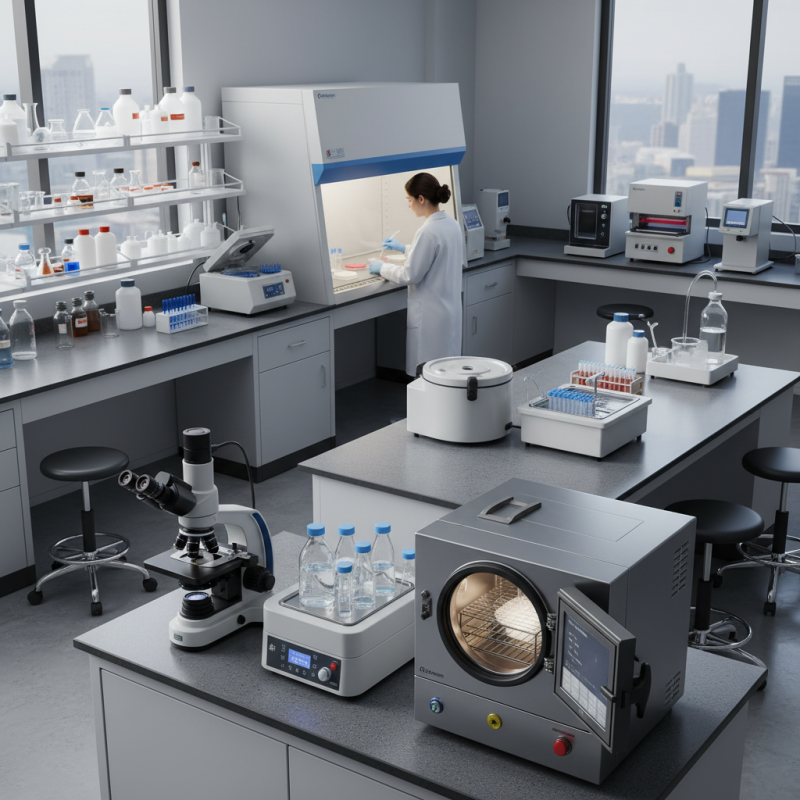
Microscopes are crucial for any microbiology laboratory. They provide the means to observe microorganisms, a task vital for research and diagnostics. A well-functioning microscope allows scientists to view cell structures, shapes, and behaviors. Essential details may include the size and arrangement of bacteria, which can influence identification.
Understanding the types of microscopes is beneficial. Light microscopes are the most common. They use visible light for imaging. But they have limitations. For some microorganisms, a higher resolution is necessary. Electron microscopes can provide that. They reveal intricate details that light microscopes miss. This can deepen our understanding of microbial life.
In practice, varying skills can affect observations. Some users may struggle with focusing techniques. Others might lack patience during lengthy preparations. Each user’s experience shapes their findings. Proper training is vital for accurate results. A microscope is more than just a tool; it’s an extension of the user’s knowledge and precision.
Autoclaves are critical in microbiology labs. They ensure sterility by using high-pressure steam. This method effectively kills bacteria, viruses, fungi, and spores. The process is straightforward but requires careful monitoring. Each cycle must reach the correct temperature for sufficient time. Understanding these parameters is vital. Poorly calibrated autoclaves can lead to contamination. Even minor errors can jeopardize research results.
Proper use and maintenance of autoclaves is essential. Regular inspections help ensure reliability. Users should be trained to operate these machines. Mistakes can occur if someone is not cautious. Biological materials must be adequately packaged before sterilization. A simple oversight here can result in unintended failures. Researchers must not take sterilization for granted.
Inaccurate readings or faulty seals can compromise sterility. Testing autoclave efficiency through biological indicators is advisable. This additional step adds assurance. Leaders in microbiology emphasize validating autoclave performance. Documentation of each cycle builds confidence in results. Autoclaves are more than just machines; they are a cornerstone of microbiological safety. The responsibility lies in hands of the users to maintain their effectiveness.
In microbiology laboratories, incubators play a crucial role. They provide ideal environments for microorganisms, ensuring optimal growth conditions. These devices maintain specific temperatures and humidity levels, fostering specialized experiments. With precise control over these factors, scientists can cultivate various microorganisms effectively.
Tips: Regularly calibrate your incubator. Check temperatures and humidity to ensure accuracy. Keep the door closed as much as possible. Frequent opening disrupts the internal environment.
Temperature fluctuations can hinder growth. Some microorganisms need specific heat levels. Investigate the needs of your microorganisms to maximize growth potential. If you're experiencing inconsistent results, it might be worth reflecting on your incubation settings.
Humidity control is equally important. Too much moisture can lead to contamination. Conversely, too little can stall growth. Monitor the moisture levels carefully to maintain a healthy balance. Experiment with different settings to find what works best for your samples.
| Equipment | Function | Key Features | Ideal Use |
|---|---|---|---|
| Incubator | Maintains optimal temperature for microbial growth | Temperature control, consistent humidity | Bacterial cultures, yeast fermentation |
| Autoclave | Sterilizes equipment and media | High-pressure steam, safety features | Preparing culture media, sterilizing tools |
| Laminar Flow Hood | Provides aseptic environment for handling cultures | HEPA filters, adjustable airflow | Cell culture work, media preparation |
| Microscope | Enables visualization of microorganisms | Variety of lenses, adjustable magnification | Identifying and studying microorganisms |
| pH Meter | Measures acidity or alkalinity of solutions | Digital display, calibration features | Preparing culture media, environmental testing |
| Centrifuge | Separates components based on density | Variable speed, multiple rotor options | Harvesting cells, separating liquids |
| Spectrophotometer | Measures light absorbance of solutions | Digital readout, various path lengths | Assaying microbial growth and concentration |
| Vortex Mixer | Mixes samples quickly and efficiently | Variable speed settings, easy to use | Homogenizing solutions, sample preparation |
| Water Bath | Maintains samples at specific temperatures | Temperature control, heating capabilities | Enzyme reactions, culture media warming |
| Refrigerator | Stores biological samples and reagents | Temperature stability, adjustable shelves | Preserving samples, reagent storage |
In any microbiology lab, precision is crucial. Pipettes and micropipettes are essential tools for accurate liquid handling. They allow for the transfer of small volumes with minimal error. This accuracy is vital for experiments that require specific concentrations of solutions.
Using pipettes may seem straightforward, yet small mistakes can cascade into larger issues. Ensure that the pipette is calibrated regularly. A miscalibrated tool can lead to inconsistent results. Consider adopting a systematic approach to measure and record the volume used in each experiment.
Tips: Always check for air bubbles before dispensing liquid. Even tiny bubbles can affect results. Keep a consistent grip when using micropipettes; this may help you maintain steadiness. Practice using different techniques to find what works best in your workflow.
Find a balance between speed and accuracy. Rushing can lead to pipetting errors. It's essential to learn how to balance efficiency while ensuring dependable results. Regularly revisiting your techniques may reveal areas that need improvement. Mastering these tools is key in microbiology research.
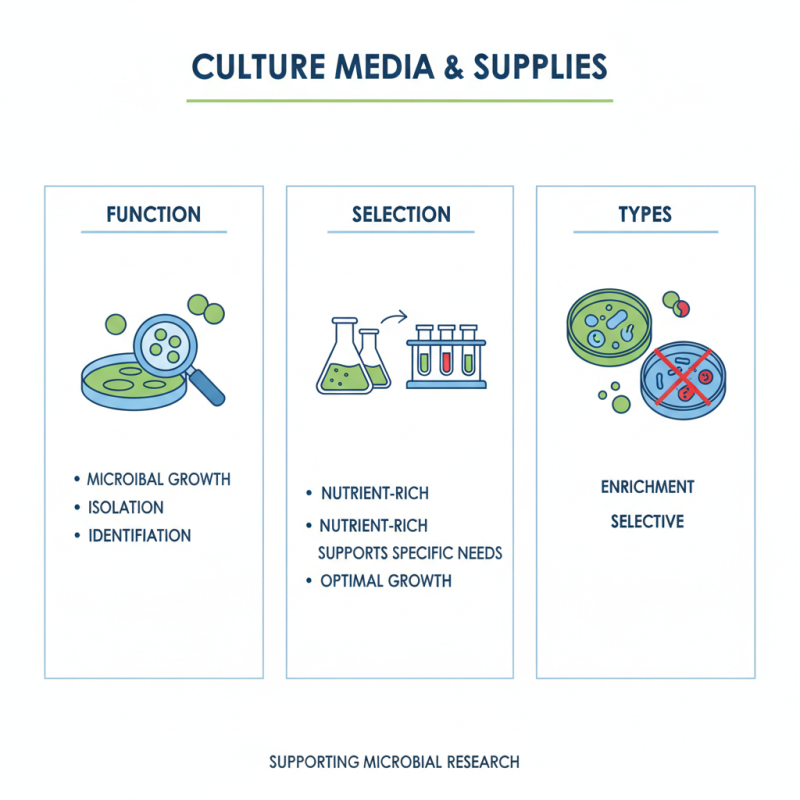
Culture media and supplies are vital for microbial growth and isolation in any laboratory. It is essential to select the right media to support the specific needs of microorganisms. By choosing nutrient-rich formulations, researchers can ensure optimal growth conditions. Different types of media serve unique purposes. For example, selective media allows specific microbes to thrive while inhibiting others. This selective growth is crucial for accurate identification.
The process of preparing culture media requires precision. Ingredients must be measured correctly to avoid contamination. A sterile environment is necessary during preparation to maintain reliability. Researchers often face challenges related to media formulation or contamination. These issues can impede research progress. Testing different media can lead to better outcomes. It may require time and patience, but experimentation is key to success.
Proper supplies like petri dishes, pipettes, and sterilization tools are equally important. They help maintain a clean workspace and avoid external contamination. Each piece of equipment plays a role in ensuring the integrity of the experiments. Keeping a detailed log of observations can help identify successful techniques. Reflecting on what works and what doesn’t can enhance future microbial studies.