Why is Research Equipment Essential for Scientific Advancements?
Research equipment plays a critical role in driving scientific advancements. It empowers researchers to conduct experiments, gather data, and validate findings. The accuracy of any scientific study heavily depends on the quality of research equipment.
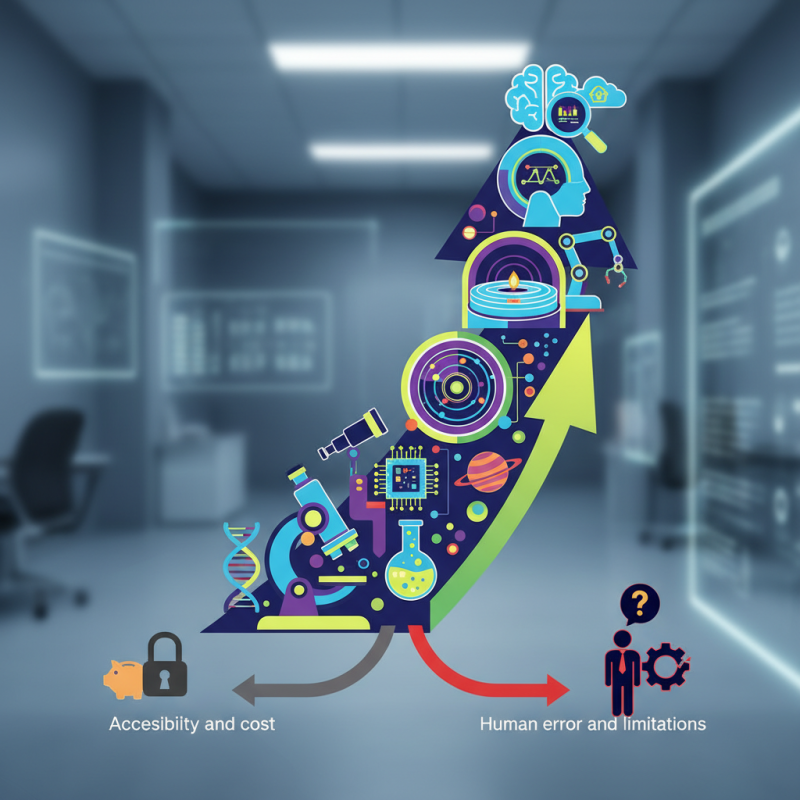
With advancements in technology, modern research equipment has become more sophisticated. This allows for deeper exploration in various scientific fields, from biology to physics. However, the reliance on complex machines can also raise questions about accessibility and cost. Not all institutions can afford cutting-edge tools, leading to disparities in research opportunities.
One must also reflect on the potential limitations. Even with advanced equipment, human errors can occur. Misinterpretation of data or improper use of instruments can lead to flawed outcomes. Thus, while research equipment is essential, the need for expert training and awareness is equally important.
Importance of Research Equipment in Advancing Scientific Knowledge
Research equipment plays a crucial role in advancing scientific knowledge. It enables scientists to explore complex phenomena and gather precise data. According to a report from the National Science Foundation, over
50% of major scientific breakthroughs in the past decade were directly linked to the use of advanced research tools. These tools facilitate the measurement and analysis needed to unravel intricate scientific questions.
Moreover, high-quality equipment enhances reproducibility in research. In a survey by the Scientific Equipment and Furniture Association, 63% of researchers indicated that reliable instruments significantly impact their ability to replicate experiments.
This replication is essential for validating theories and building a solid foundation of scientific knowledge. However, obtaining such equipment is a continual challenge for many institutions, particularly those with limited funding.
Investing in modern research equipment can propel scientific discovery but also presents challenges. Not all institutions can afford state-of-the-art tools. This disparity raises questions about equity in science. Moreover, reliance on equipment may sometimes overshadow the importance of theoretical exploration.
Thus, while research equipment is vital, the scientific community must also reflect on maintaining a balance between empirical data and theoretical frameworks.
Types of Research Equipment and Their Roles in Different Disciplines
Research equipment plays a pivotal role in various scientific fields. In biology, microscopes are crucial. They allow researchers to study cells and microorganisms in detail. Without them, understanding life at the microscopic level would be impossible. Fields like genetics rely on high-quality imaging and analysis. Advanced sequencing instruments reveal DNA structures. This drives innovations in medicine and agriculture.
In physics, particle accelerators are indispensable. They investigate the fundamental components of matter. These large-scale machines can create conditions similar to those of the early universe. Their complex data analysis techniques provide insights that broaden human knowledge. Similarly, in environmental science, various sensors monitor pollution levels. They help track climate change's effects. Accurate data collection is essential for informed decision-making.
Each piece of equipment serves specific purposes in its discipline. However, reliance on technology can lead to neglecting foundational knowledge. Researchers must balance using tools with maintaining theoretical understanding. As advancements continue, a thoughtful approach is necessary. The role of research equipment is not just in its advancement but also in fostering a deeper comprehension of our world.
Impact of Technological Innovations on Research Equipment Development
Technological innovations have dramatically transformed research equipment over recent years. Advancements in materials science have led to lighter and more durable tools. For instance, the use of carbon fiber composites has enhanced the strength of scientific instruments, allowing for greater precision in measurements. These improvements enable scientists to gather data that was previously unattainable.
However, the rapid pace of innovation also brings challenges. Some researchers find it difficult to keep up with the latest developments. Training becomes essential for effective equipment use. Despite advancements, not all innovations enhance research outcomes. In some cases, tools may be too complex or expensive, leading to hesitance among researchers. The balance between innovation and practicality often requires careful consideration.
On a broader scale, technological changes push the boundaries of what we know. New imaging techniques reveal previously hidden aspects of biological systems. Yet, the dependency on high-tech tools can sometimes overshadow fundamental scientific skills. Researchers may become reliant on technology for data interpretation, rather than developing their analytical skills. This evolving landscape calls for reflection on how we use these tools in research.
Why is Research Equipment Essential for Scientific Advancements? - Impact of Technological Innovations on Research Equipment Development
| Research Field |
Equipment Type |
Recent Innovations |
Impact on Research |
| Biology |
Microscope |
Digital Imaging |
Enhanced visualization of cellular structures |
| Chemistry |
Spectrometer |
Portable Spectrometry |
Field analysis of samples |
| Physics |
Particle Accelerator |
Quantum Technology Integration |
Advanced material research |
| Environmental Science |
Gas Analyzer |
Real-time Atmospheric Monitoring |
Immediate data for climate studies |
| Engineering |
3D Printer |
Bioprinting Technology |
Advancements in tissue engineering |
Challenges in Accessing and Funding Scientific Research Equipment
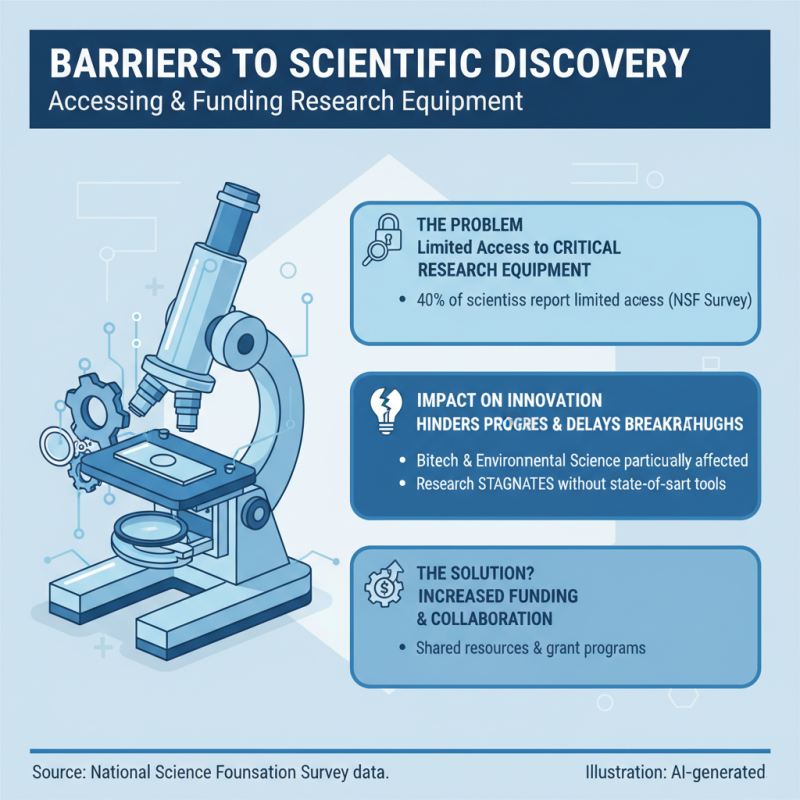
Access to research equipment is crucial for scientific inquiry. Yet, many researchers face significant challenges. A survey by the National Science Foundation indicated that nearly 40% of scientists reported limited access to necessary equipment. This can hinder innovation and delay breakthroughs. In fields like biotechnology and environmental science, state-of-the-art tools are essential. Without these, research can stagnate.
Funding is another formidable barrier. According to the National Institutes of Health, funding competition is fierce, with success rates hitting an all-time low of 17.8% in 2020. This means that many researchers struggle to acquire the funds needed for vital equipment. The disparity in funding also creates gaps between well-funded institutions and smaller facilities. Often, researchers at these smaller institutions lack the resources for basic equipment, affecting their ability to contribute to the scientific community.
Additionally, equipment maintenance and operational costs can be daunting. Many research teams must prioritize their budgets to keep their equipment functional. Even in well-funded labs, financial constraints can lead to tough choices. Researchers may need to forego necessary upgrades, slowing their progress. This ongoing struggle for resources highlights a critical need for sustained investment in research infrastructure.
Future Trends in Research Equipment and Their Potential Implications
The future of research equipment holds immense promise but comes with challenges. Technological advancements are pushing boundaries in scientific inquiry.
Instruments like high-resolution microscopes and advanced spectrometers are enabling researchers to explore the micro and nano worlds with greater precision. These tools uncover details previously unseen, leading to breakthroughs in medicine and materials science.
However, the rapid pace of innovation also raises concerns. Not all researchers can access the latest equipment, creating disparities in scientific capabilities. Smaller institutions may struggle to keep pace with advancements. There’s also the question of training. As equipment becomes more sophisticated, effective training programs are essential to ensure researchers can utilize these tools efficiently.
Ethical considerations are critical as well. The implications of utilizing advanced equipment extend beyond results. Researchers must reflect on how their work affects society.
Balancing innovation with ethical responsibility remains a complex challenge. As we look ahead, fostering accessibility and promoting ethical practices in research equipment will shape the landscape of scientific advancements.