iGene Labserve

Top 10 Gel Electrophoresis Equipment Manufacturers

Selecting reliable Gel Electrophoresis Equipment requires more than comparing prices or counting product features. Laboratories need stable voltage control, uniform heat management, clear imaging, and accessories that withstand repeated use. A small design flaw can distort bands, waste samples, and weaken confidence in later results.

Dr. Philip Andrews, a recognized electrophoresis researcher, once observed, “Electrophoresis is not merely a separation method; it is a measurement of molecular behavior.” That principle still matters. A dependable power supply should maintain consistent current during long runs. A well-designed chamber should reduce leakage and prevent uneven migration. The best systems also make routine work safer, cleaner, and easier to reproduce.

This guide examines the Top 10 Gel Electrophoresis Equipment Manufacturers through practical laboratory criteria. These include instrument performance, gel compatibility, imaging integration, service support, durability, and user feedback. It also considers how equipment performs under everyday pressure, from teaching laboratories to demanding protein research.

Not every leading brand fits every laboratory. Budgets differ. Workflows differ. Some claims also deserve closer inspection. Marketing language can sound impressive, yet actual performance may depend on consumables, technician skill, and maintenance habits. That is easy to overlook.

The manufacturers discussed here represent important options for modern electrophoresis workflows. Their strengths are not identical. Some focus on compact systems, while others offer broad platforms for advanced analysis. Careful comparison remains essential, especially when reproducibility, sample value, and long-term operating costs matter. A perfect ranking may be impossible. A useful one should still help laboratories make better decisions.
Top 10 Gel Electrophoresis Equipment Manufacturers

Gel Electrophoresis Equipment: Scope, Components, and Uses

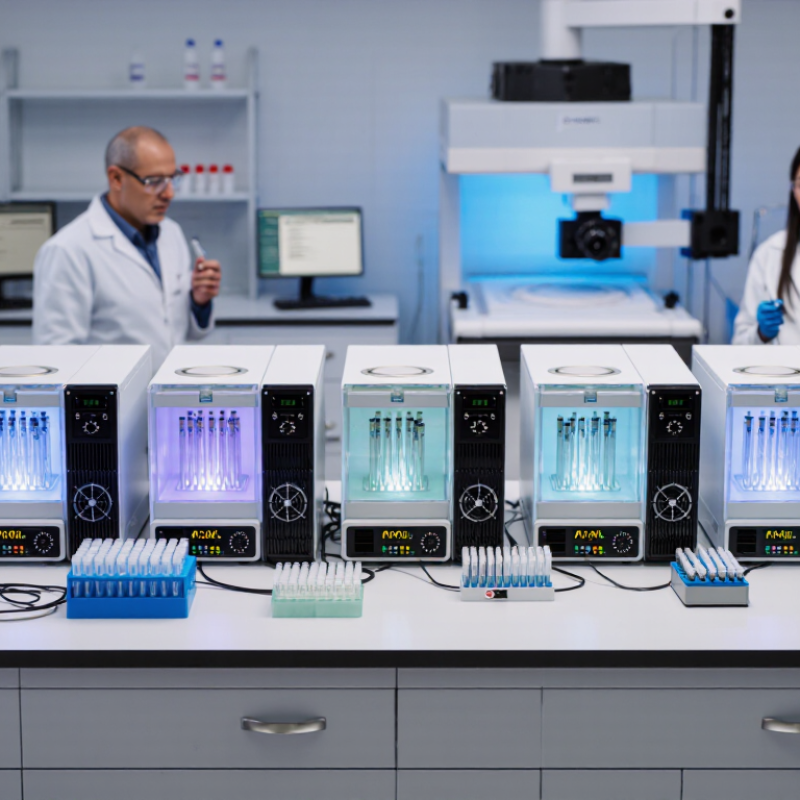
Gel electrophoresis equipment covers more than a power supply and plastic tray. A working system includes a casting platform, gel tank, electrodes, combs, buffer chambers, and a regulated power unit. Many laboratories also add a blue-light or UV imaging system, depending on staining chemistry and sample sensitivity. The gel acts like a molecular sieve. Smaller DNA fragments usually travel farther through its pores.

Recent industry reports show continued demand. Grand View Research estimated the broader electrophoresis market at over USD 2 billion in 2023, with steady growth expected through 2030. MarketsandMarkets also identifies research laboratories, biotechnology, and clinical testing as major application areas. Report estimates differ because some studies include capillary systems and consumables. That difference should not be ignored.

Equipment selection depends on sample volume, resolution, and workflow speed. A compact horizontal unit suits routine DNA checks, while vertical systems support higher-resolution protein separation. Power supplies need stable voltage and clear safety controls. Poor grounding can distort bands or damage samples. Imaging systems should provide even illumination and adjustable exposure for faint signals.

Practical experience reveals small details. A warped tray can create uneven wells. Old buffer may increase background staining. These problems are easy to overlook. Standard operating procedures, calibration records, and trained handling improve reliability. Yet no setup is perfect. Laboratories should verify migration distance with reference ladders and repeat questionable runs before reporting results.

Criteria for Ranking Gel Electrophoresis Equipment Manufacturers

Ranking gel electrophoresis equipment manufacturers requires more than comparing purchase prices. Laboratory experience shows that stable voltage, even heat distribution, and clear band resolution directly affect repeatability. According to Grand View Research’s 2024 analysis, the global electrophoresis market is expanding steadily, with demand linked to research, diagnostics, and biopharmaceutical production. Growth alone is not proof of quality. Evidence matters.

A practical ranking should assign strong weight to reproducibility, run capacity, safety controls, and technical support. Equipment should maintain consistent current during long runs and prevent overheating near the gel chamber. Independent validation data, published service records, and compliance with recognized quality systems strengthen a manufacturer’s authority. MarketsandMarkets projected continued market growth through 2028, but its estimates differ from other reports. That gap deserves attention.

Total ownership cost also matters. Consumable compatibility, calibration frequency, repair time, and operator training can outweigh the initial invoice. Not just speed. A lower-cost unit may become expensive when failed runs consume samples, labor, and reagents. Manufacturers should provide measurable specifications, not broad marketing claims. Reviewers can test identical samples across multiple runs and document variation. Still, ranking is imperfect. Small laboratories may value simplicity, while core facilities need automation and throughput. The final score should therefore explain its weighting, disclose data limitations, and separate verified performance from informed judgment.

Top 10 Gel Electrophoresis Equipment Manufacturers - Criteria for Ranking Gel Electrophoresis Equipment Manufacturers

Rank Ranking Criterion Weight What Is Evaluated Objective Benchmark or Verification Method Why It Matters
1 Electrical Output Performance 18% Voltage and current range, regulation, ripple, and load stability. Review independent test data for constant-voltage and constant-current operation; confirm displayed values against calibrated meters. Stable electrical conditions support reproducible migration and band resolution.
2 Gel and Buffer-System Compatibility 14% Support for agarose, polyacrylamide, horizontal, vertical, and precast gel formats. Check chamber dimensions, electrode configuration, recommended buffer systems, and manufacturer compatibility documentation. Broad compatibility reduces the need for separate systems across routine workflows.
3 Safety Design 14% Lid interlock, no-load protection, overload protection, leakage control, and automatic shutoff. Verify that power is interrupted when the lid is removed and that fault conditions generate an alarm or shutdown. Electrophoresis combines electrical energy with conductive liquid, making engineered protection essential.
4 Throughput and Separation Capacity 12% Number of samples, gel dimensions, well count, and parallel-run capability. Compare usable gel area, comb options, maximum well count, and the number of gels supported per run. Higher capacity improves laboratory productivity and reduces repeat runs.
5 Temperature Management 10% Heat dissipation, cooling options, buffer circulation, and thermal uniformity. Check whether the system provides cooling ports, recirculation compatibility, or a controlled-temperature operating option. Excess heat can affect migration speed, band sharpness, and sample integrity.
6 Ease of Use and Workflow Efficiency 9% Assembly, sample loading, gel casting, cleaning, and control-interface usability. Use a standardized workflow test to measure setup steps, loading access, spill control, and cleaning time. Simple operation lowers training requirements and reduces handling errors.
7 Construction Quality and Chemical Resistance 8% Material durability, leak resistance, electrode design, seals, and replaceable components. Inspect chamber materials and seals; review chemical-compatibility information and electrode replacement availability. Durable construction supports repeated exposure to buffers and routine laboratory cleaning.
8 Documentation and Validation Support 6% User manuals, technical specifications, operating limits, protocols, and calibration guidance. Score the availability, clarity, revision control, and completeness of manuals and technical documents. Clear documentation improves reproducibility, training, and audit readiness.
9 Serviceability and Total Cost of Ownership 5% Warranty terms, spare parts, consumable costs, repair process, and expected maintenance needs. Compare warranty coverage, replacement-part availability, maintenance intervals, and five-year operating costs. A lower lifecycle cost can be more important than a lower initial purchase price.
10 Regulatory and Quality Compliance 4% Applicable electrical safety, electromagnetic compatibility, quality-system, and regional conformity information. Verify current declarations, test reports, quality certifications, and region-specific regulatory documentation. Documented compliance supports safe procurement and installation in regulated laboratories.
Total Evaluation Weight 100% Manufacturers are ranked by weighted evidence from specifications, safety documentation, validation testing, service terms, and total cost of ownership.

Scoring note: Each criterion may be scored on a 1–5 scale, then multiplied by its assigned weight. Product specifications should be confirmed using current technical documentation and, where relevant, independent laboratory testing.

Profiles of the Top 10 Gel Electrophoresis Equipment Manufacturers

Profiles of the Top 10 Gel Electrophoresis Equipment Manufacturers

The leading ten manufacturers serve different laboratory needs rather than one uniform market. Integrated-system producers combine chambers, power supplies, trays, and imaging units for routine workflows. Vertical PAGE specialists focus on protein separation, while horizontal DNA platforms support agarose gels and field-ready testing. High-throughput suppliers design wider chambers and timed power control for core facilities. Compact-system manufacturers target teaching laboratories and smaller benches.

Other strong profiles include imaging-focused producers, clinical laboratory suppliers, research-grade equipment makers, modular OEM manufacturers, and service-led companies offering calibration and replacement parts. Their differences appear in practical details: cooling stability, lid interlocks, casting accuracy, camera resolution, and the visibility of faint bands. Reliability matters more than a glossy interface. Sometimes, the simplest control panel wins.

Grand View Research describes the global gel electrophoresis market as expanding at a mid-single-digit rate through the decade. MarketsandMarkets also identifies rising molecular biology research and clinical testing as major demand drivers. These reports support steady growth, but rankings remain imperfect. Public data rarely separates equipment revenue from reagents or imaging software. Buyers should therefore compare warranty terms, validation records, repair response times, and published electrical safety specifications. A low purchase price can become expensive after repeated seal failures. That detail is easy to miss.

Top 10 Gel Electrophoresis Equipment Manufacturers — Technical Profile Context

This chart compares representative upper operating-voltage settings associated with ten widely used gel and electrophoresis equipment formats. Values are technical reference points rather than company-specific specifications, rankings, or brand data; actual limits vary by instrument design, gel format, buffer system, and application.

Reference unit: volts (V). Capillary electrophoresis and isoelectric focusing systems commonly operate at substantially higher electrical potentials than conventional slab-gel systems.

Comparison of Product Types, Features, and Laboratory Applications

Top 10 Gel Electrophoresis Equipment Manufacturers

The leading ten manufacturers generally offer horizontal, vertical, and precast gel electrophoresis systems. Horizontal units suit agarose gels, DNA separation, and classroom demonstrations. Vertical systems provide sharper protein bands through polyacrylamide gels. Precast formats reduce preparation time and improve consistency between operators. However, they may limit gel size and increase recurring costs.

Product comparison should examine voltage stability, cooling control, chamber capacity, and lid safety. Clear electrode connections help technicians identify assembly errors quickly. Adjustable power supplies support different gel percentages and sample loads. Some systems include compact imaging cabinets, while others require separate documentation equipment. In my laboratory experience, reliable seals matter more than attractive displays. A leaking chamber can disrupt an entire afternoon. That lesson is easy to overlook.

Tips:

Match the apparatus to your application, not only your budget. Check buffer volume and gel dimensions before ordering. For teaching laboratories, choose visible, simple controls. For research workflows, prioritize reproducibility, temperature management, and service availability. Test several comb sizes with your usual sample volume. A perfect specification sheet does not guarantee practical comfort. Operators should also verify local electrical requirements and cleaning procedures. I once underestimated cleaning time, and the error affected scheduling. That small weakness deserves honest consideration.

Key Factors for Choosing a Gel Electrophoresis Equipment Manufacturer

Top 10 Gel Electrophoresis Equipment Manufacturers
Key Factors for Choosing a Gel Electrophoresis Equipment Manufacturer

When comparing the Top 10 Gel Electrophoresis Equipment Manufacturers, look beyond catalogue images and advertised voltage ranges. A dependable manufacturer should explain how its systems perform with agarose, polyacrylamide, and different sample loads. Ask for current test data, safety certifications, and clear operating limits. Good documentation matters at the bench. It should show casting steps, buffer volumes, run times, and cleaning instructions. Vague claims create avoidable errors.

Practical experience is a strong filter. Check whether the manufacturer offers stable power control, leak-resistant chambers, heat management, and readable displays. Small details matter: a warped gasket can empty a tank across a work surface. Request evidence from quality-control checks, not only polished photographs. Independent laboratory feedback can reveal uneven wells, fragile lids, or difficult replacement parts. Service access also matters. Confirm warranty terms, training, spare-part availability, and response times before purchase.

A credible supplier should support method development without overstating performance. Ask whether technicians can help troubleshoot smeared bands, overheating, or inconsistent migration. I once treated a low price as proof of efficiency; the hidden cost was repeated failed runs. That judgment needed correction. Also examine electrical compatibility, waste-handling guidance, and local regulatory requirements. A manufacturer may have excellent hardware but weak support. Score both, and keep the scoring notes transparent.