Top Electrophoresis Equipment for Effective Laboratory Research?
In today’s fast-paced laboratory research environment, the choice of electrophoresis equipment plays a crucial role. Dr. Jane Smith, a leading expert in molecular biology, emphasizes, "The right electrophoresis tools can make or break your experiments." The effectiveness of these tools impacts both results and workflow efficiency.
Selecting the right electrophoresis equipment can be daunting. Many researchers grapple with options available on the market. Each type has its specific advantages and drawbacks. For instance, gel electrophoresis remains a staple, but newer techniques are emerging. Understanding these choices is essential for any lab.
Different equipment, such as power supplies and gel boxes, can greatly influence outcomes. Researchers often overlook the electrical settings, leading to subpar results. Continuous learning and adaptation are necessary in this evolving field. Thus, knowing which electrophoresis equipment is most suitable is vital for effective laboratory research.
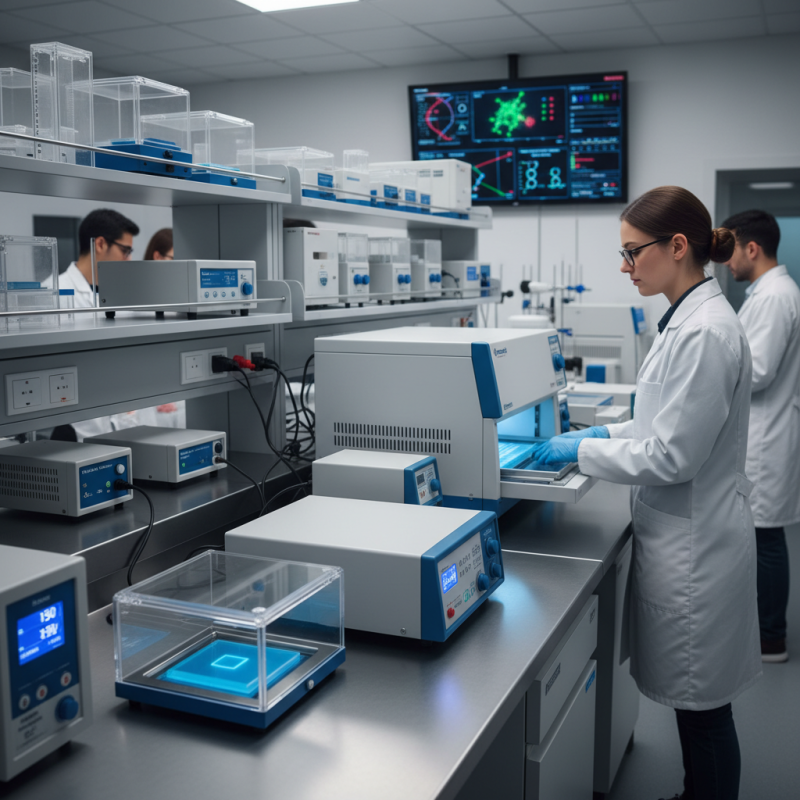
Essential Features of Electrophoresis Equipment for Laboratories
Electrophoresis equipment is essential for laboratory research. Researchers use it to separate macromolecules. DNA, RNA, and proteins are commonly analyzed this way. Selecting the right equipment can significantly impact results.
Key features to consider include the usability and compatibility of the equipment. Does it cater to your specific samples? Ease of setup is critical for efficiency. The buffer system should be easy to manage. A reliable power supply ensures consistent results. Look for adjustable voltage settings to meet various protocols.
The equipment's gel casting capabilities are another consideration. Some models have built-in functionality, while others require additional tools. It can be frustrating if the chosen model is harder to use. Researching user experiences can offer insights. Quality shouldn’t be compromised for a low price. Measurements and results could be affected.
Types of Electrophoresis Techniques Used in Scientific Research
Electrophoresis is crucial in modern scientific research. Various techniques exist, each with specific applications and advantages. Gel electrophoresis, one of the most common methods, separates DNA fragments based on size. Research shows that this method offers high sensitivity and resolution, essential for genetic studies. According to a report by MarketsandMarkets, the global electrophoresis market is projected to reach over $3 billion by 2024. This indicates a growing reliance on these techniques.
Another notable technique is capillary electrophoresis. It provides faster analysis times and requires smaller sample volumes. This method excels in detecting trace amounts of substances. A study published in the Journal of Chromatography highlights that capillary electrophoresis can achieve resolutions up to 20 times higher than traditional methods. However, many labs struggle with equipment costs and technical training.
Isoelectric focusing (IEF) allows proteins to be separated by their isoelectric point. Despite its efficiency, IEF is complex and may lead to inconsistent results without proper calibration. Maintaining optimal conditions is critical. Not every lab achieves this reliably. As the field advances, researchers must adapt and refine their techniques for better accuracy and efficiency. This ongoing evolution emphasizes the need for continuous learning and adaptation in laboratory environments.
Key Manufacturers and Brands of Electrophoresis Equipment
Electrophoresis equipment plays a crucial role in laboratory research. It allows scientists to separate biomolecules based on size and charge. Many manufacturers produce a diverse range of products. Some focus on gel electrophoresis systems, while others specialize in capillary options. Each brand aims to enhance precision and efficiency.
Leading brands often emphasize user-friendly designs. However, not all products deliver consistent results. Quality can vary greatly. Some researchers report challenges with specific devices. This inconsistency might stem from the complexity of the technology. Calibration and maintenance are essential. Neglecting these can lead to misleading data.
Moreover, the market offers budget and premium options. While affordable tools are tempting, they sometimes lack durability. Researchers must weigh the cost against long-term reliability. Finding the right balance is key. It's an ongoing process of evaluation and adjustment. Ultimately, the choice of equipment impacts the reliability of research outcomes.
Factors to Consider When Choosing Electrophoresis Equipment
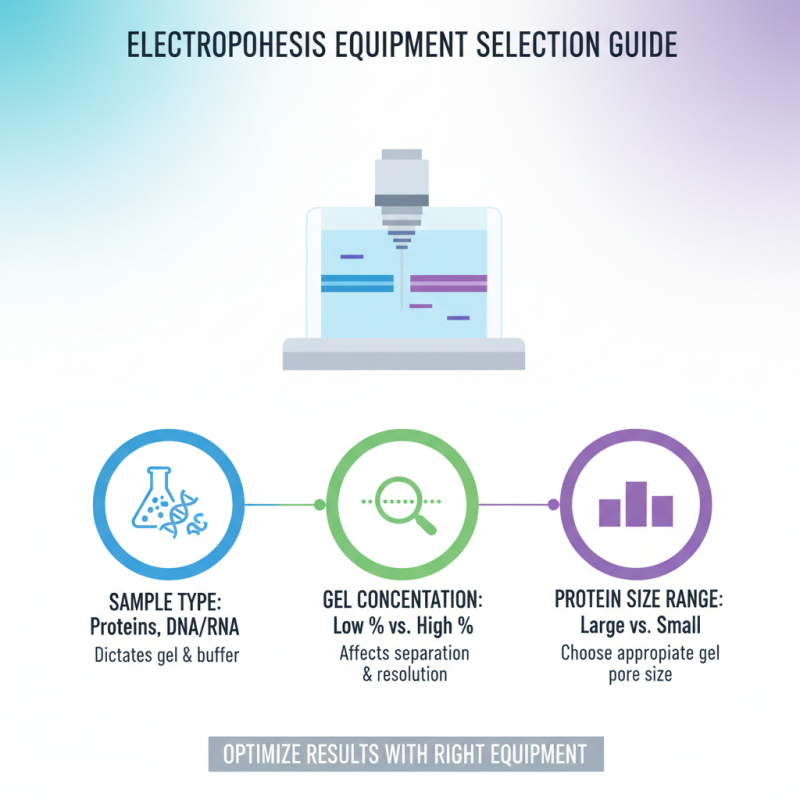
When selecting electrophoresis equipment, several critical factors come into play. The type of samples you work with dictates your equipment choice. For proteins, you'll need specific gels that accommodate various sizes. Choosing the right gel concentration impacts the resolution of your findings. Low concentration gels might not separate all proteins effectively.
Another key consideration is the power supply. It should match the requirements of your equipment to avoid inconsistent results. A power supply that is too weak can lead to poor separation. Moreover, consider the size and capacity of the electrophoresis unit. A compact design is useful in small labs, but larger units may provide enhanced capabilities.
Don't overlook the importance of user-friendly features. Simple interfaces can save time, especially during busy lab hours. However, more advanced models might offer better control over experimental conditions. Reliability is crucial in experimentation. Equipment that frequently malfunctions may lead to wasted samples and time. Balancing function with ease of use is often a challenge.
Applications of Electrophoresis in Modern Laboratory Studies
Electrophoresis has become essential in modern laboratory research. This technique separates molecules based on size and charge, allowing scientists to analyze proteins and nucleic acids. Many laboratories utilize agarose and polyacrylamide gels for this purpose. These materials create a matrix through which samples migrate when an electric current is applied. The visual results can be striking, with distinct bands representing different substances.
The applications of electrophoresis are diverse. Researchers use it in genetics to study DNA fragments. In biotechnology, it's employed to analyze protein expressions in various conditions. Clinical labs rely on it for disease diagnosis. However, not all protocols are straightforward. Sometimes, samples can yield unexpected results. Inconsistent gel quality can lead to band distortion, complicating interpretations.
Despite its advantages, challenges remain. Factors like buffer composition and voltage settings can affect separation quality. Researchers must continuously refine their techniques, balancing speed and resolution. It's a learning process, full of trial and error, which pushes the boundaries of laboratory capabilities. Electrophoresis remains a vital tool in our quest for knowledge in the biosciences.
Top Electrophoresis Equipment Usage in Modern Laboratory Studies