
iGene Labserve

2026 Top Tank Container Types for Global Buyers

Global buyers choosing a Tank Container in 2026 face more than a capacity decision. They must weigh cargo compatibility, cleaning requirements, insulation, heating, discharge speed, and the routes their units will travel. The International Tank Container Organisation’s 2024 fleet survey estimated 801,800 tank containers worldwide at the start of 2024, up 7.3% year over year. That scale signals a mature market, but not a simple one. A standard stainless-steel tank may suit many liquid movements; specialist cargoes can call for lined, heated, gas, or cryogenic designs. Details matter.

ITCO’s president, Reg Lee, is an industry voice on tank-container operations. His practical guidance can be paraphrased this way: match the equipment to the cargo and operating conditions, not just the purchase price. That distinction matters at a loading bay, where a wrong fitting or unsuitable insulation can disrupt an otherwise well-planned shipment. Buyers should also examine test records, maintenance history, valve arrangements, and support availability. Specifications deserve close reading.

This guide compares the main tank container types global buyers are likely to consider in 2026, from general-purpose units to specialized models. It uses ITCO’s fleet data as market context, not as a forecast of future demand. One caution: published fleet totals cannot tell buyers whether a particular unit fits their cargo, route, or handling setup. That assessment still requires qualified technical review and clear operating requirements.
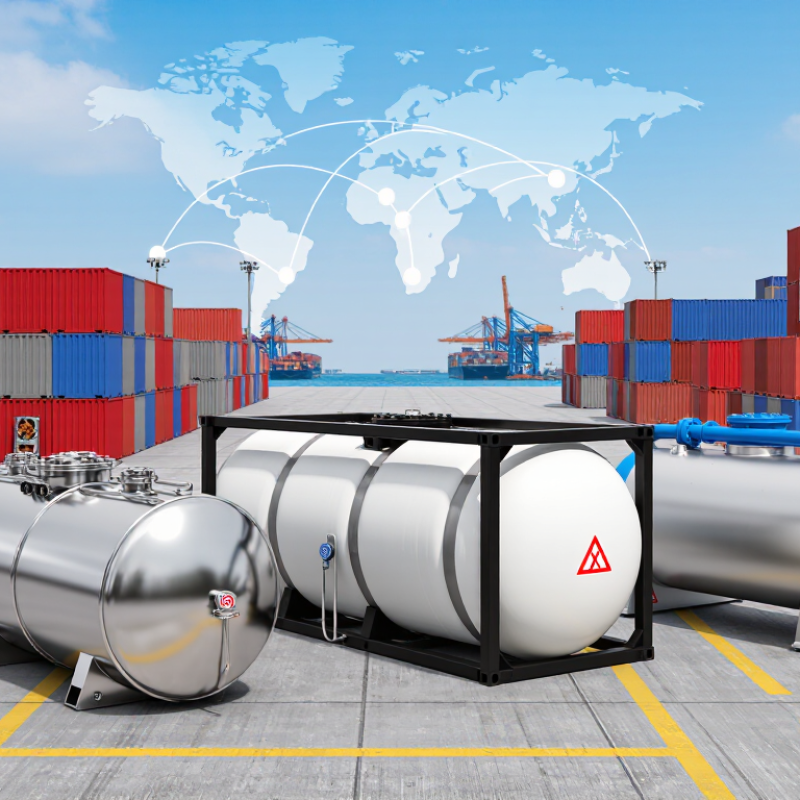
2026 Top Tank Container Types for Global Buyers

Tank Container Fundamentals and Operating Principles

2026 Top Tank Container Types for Global Buyers

Tank Container Fundamentals and Operating Principles

A tank container pairs a cylindrical vessel with a strong frame sized for standard transport equipment. The vessel holds liquid cargo, while the frame supports lifting and stacking. Its design rating, materials, and fittings determine which service it can safely perform. Standard tanks suit many compatible liquids; insulated or heated models help manage temperature-sensitive cargo. Not every tank has the same pressure limits or heating system. Check the equipment plate and technical documents.

During loading and unloading, pumps or gravity move liquid through designated valves. Pressure, temperature, and product compatibility matter throughout the trip. Liquid can surge as a container moves, so operating limits and any fitted baffles are important. A practical inspection checks closures, seals, visible damage, and valve condition. A clean-looking tank is not proof of readiness. Cleaning records and inspection status deserve equal attention. A familiar route does not eliminate the need to check the cargo and tank requirements.

Tips: Confirm the tank’s rating before loading. Verify that fittings match the transfer equipment. Keep temperature readings with shipment records when relevant. If a detail is unclear, pause and consult the equipment documentation or a qualified inspector.

2026 Top Tank Container Types for Global Buyers

Typical capacity comparison by tank container type

Values are representative capacities in liters, not guaranteed specifications. Actual capacity varies by design, configuration, and cargo requirements. A tank container uses a pressure vessel secured within a protective frame; cargo is loaded and discharged through fittings and valves, with heating, insulation, or pressure controls included when required.

Major Tank Container Types by Design and Cargo

Tank containers share an ISO frame, but their tanks are built for different cargo properties. A standard stainless-steel tank suits many liquid products, such as edible oils and liquid ingredients. For temperature-sensitive cargo, insulated tanks slow heat loss or gain during transit. Some include steam coils or electric heating. These features can help move viscous products, but they require suitable operating procedures. Fit matters.

Food-grade tanks use smooth, cleanable interiors and fittings selected to limit contamination. Operators should check the tank’s cleaning record and material compatibility, not rely on its label alone. Multi-compartment designs carry separate liquid batches in one frame. They can reduce space needs, though loading and weight distribution require careful planning. Not every cargo suits them.

Pressure tanks are designed for compatible gases and have specifications suited to their service. Cryogenic tanks use insulation to maintain very low temperatures for products such as liquid nitrogen. Their handling needs differ sharply from ordinary liquid tanks. Before selection, buyers should compare cargo properties, required temperature, pressure rating, cleaning needs, and discharge equipment. A small mismatch can delay unloading.

Specifications That Define Tank Container Performance

Tank-container performance begins with the cargo, not the catalogue label. General-purpose tanks commonly hold about 24,000–26,000 litres, but usable volume depends on density, loading limits, and route restrictions. ISO 1496-3 sets requirements for tank-container dimensions and testing; it does not make every tank suitable for every product. Check the tank code, working pressure, test pressure, and material compatibility. A pressure rating is not a product-compatibility guarantee.

Insulated and heated tanks help manage temperature-sensitive cargo, while gas tanks require pressure specifications matched to the intended service. Ask for the latest inspection records, shell material, tare weight, gross mass, and heating details. Small details matter. ITCO’s 2024 Global Tank Container Fleet Survey estimated about 801,800 units worldwide at the start of 2024. That large fleet supports standardized handling, but availability does not prove a particular unit fits your route or cargo. I would not choose by capacity alone. Even a well-written specification can leave practical questions unanswered: how evenly does the heating system perform, and how much usable volume remains after loading limits? Verify those points with the operator before booking.

2026 Top Tank Container Types for Global Buyers – Specifications That Define Tank Container Performance
Tank Container Type Typical Capacity Design and Construction Typical Performance Specifications Common Applications Key Buyer Checks
Standard liquid tank (commonly T11) Approximately 20,000–26,000 L Usually a stainless-steel pressure vessel secured within a 20-foot ISO frame; often fitted with top access and bottom discharge equipment. Many T11 tanks are designed to a 6 bar test-pressure requirement. The tank plate and applicable dangerous-goods rules determine the actual approved service limits. Non-refrigerated chemicals and other compatible bulk liquids. Confirm the UN portable-tank instruction, test date, product compatibility, valve arrangement, allowable filling ratio, and maximum gross mass.
Food-grade or sanitary liquid tank Typically 20,000–26,000 L Stainless-steel product-contact surfaces; hygienic fittings and cleaning arrangements vary by service and tank specification. Capacity and pressure rating depend on the underlying tank design. A sanitary finish or food-grade configuration does not by itself establish a specific pressure rating. Food ingredients, beverages, edible oils, and other products requiring controlled hygiene. Check material certificates, surface finish, cleaning records, seals, prior-cargo history, and whether the cleaning process meets the cargo’s requirements.
Insulated or steam-heated tank Typically 20,000–26,000 L Insulation surrounds the vessel; some units include steam-heating coils or another approved heating system. Heat retention and heating performance vary with insulation, ambient conditions, cargo properties, and heating-system design. There is no single universal temperature range. Viscous or temperature-sensitive liquids, such as certain oils, resins, and chemicals. Verify the cargo’s loading, transit, and unloading temperatures; heating-medium limits; coil material; insulation condition; and cleaning compatibility.
Higher-pressure chemical tank (for example, T14 or T20 service) Often approximately 20,000–26,000 L Pressure-vessel construction and fittings are selected for the substance and the applicable portable-tank instruction. T14 and T20 instructions generally specify a 10 bar minimum test pressure; the approved tank plate and applicable regulations remain controlling. Specified hazardous or specialized chemicals requiring a higher-pressure tank design. Match the tank instruction and approval to the exact substance, confirm material compatibility, and inspect the pressure-test and inspection records.
Cryogenic tank container Commonly around 20,000–25,000 L, depending on design Double-wall vessel with vacuum insulation, designed to limit heat ingress and manage cryogenic service conditions. Operating pressure, hold time, and allowable temperature are design-specific; values must be taken from the vessel documentation and data plate. Liquefied gases carried at cryogenic temperatures, subject to the unit’s approvals and service limits. Check the approved gas, pressure-relief devices, vacuum-insulation condition, inspection status, and loading and handling procedures.
Swap-body tank Often approximately 30,000–36,000 L Longer intermodal tank body designed for compatible road and rail handling systems; dimensions differ from a standard 20-foot ISO tank. Capacity, gross mass, and handling limits depend on the body configuration, chassis, route, and local road and rail regulations. Regional road-and-rail transport of bulk liquids where the network accepts swap-body equipment. Confirm route and terminal compatibility, permitted axle loads, lifting points, overall dimensions, and interchange requirements.
Specification note: Capacities and design details shown are indicative industry ranges, not guarantees for an individual unit. Tank codes, pressure ratings, materials, dimensions, and permitted cargoes vary by design and jurisdiction. Always verify the tank data plate, current inspection documents, and applicable transport regulations before selection or loading.

Cargo Compatibility, Safety, and International Standards

Tank container selection starts with the cargo, not the route. Stainless-steel tanks suit many liquid products, while insulated or steam-heated models help control temperature-sensitive loads. Gas tanks use pressure-rated designs. Linings can add protection, but they do not make every chemical compatible. Check the cargo’s material data, cleaning requirements, viscosity, and temperature range against the tank specification. Small residue matters. A gasket or valve can become the weak point.

Safety depends on more than tank type. The International Tank Container Organisation’s 2024 survey estimated a global fleet of about 801,800 units, showing how widely these systems are used. That scale makes consistent inspection and documentation essential. ISO 1496-3 sets requirements for tank-container design and testing; the CSC framework addresses container safety approval and examination. For regulated cargoes, the assigned tank instruction and applicable transport rules must also match the shipment. Never assume a previous load proves suitability. Ask for current inspection records, pressure-test dates, material certificates, and cleaning evidence. Standards help, but paperwork can still miss a practical detail: confirm fittings and discharge connections before loading.

How Global Buyers Can Select the Right Tank Container

Selecting the right tank container starts with the cargo, not the price. Record its density, viscosity, temperature range, and material compatibility requirements. A standard insulated tank may suit stable liquids, while a heated tank can help products flow during unloading. Temperature-sensitive cargo may need active temperature control. Pressure-rated designs are appropriate only when the product and operating process require them. Details matter.

Then check the route and handling setup. Confirm that the tank’s dimensions, gross weight, fittings, and discharge connections match the carrier, terminal, and receiving site. A small mismatch, such as an incompatible hose connection, can delay unloading. Ask operators about heating access, cleaning procedures, and available maintenance support at each end of the journey. Review inspection records and equipment specifications before purchase or leasing; do not rely on a product label alone.

Buyers sometimes focus too heavily on the initial rental rate. Total cost can also include heating, cleaning, repositioning, and time spent waiting for suitable equipment. Still, a more complex tank is not automatically the safer or better choice. Compare realistic operating conditions, and revisit assumptions with technical staff when cargo behavior or routes change. Test assumptions.