Top 10 Truck Air Seat Control Valve Types for Global Buyers?
Choosing the right Truck Air Seat Control Valve can directly affect driver comfort, suspension response, and long-term maintenance costs. For global buyers, this component is more than a small pneumatic fitting. It controls air flow between the seat, air spring, and exhaust circuit. A poorly matched valve may cause slow height adjustment, unwanted air loss, or an uncomfortable ride over rough roads.
The market includes mechanical height control valves, push-button valves, rotary valves, dump valves, and electrically assisted designs. Each type serves different truck interiors, seat structures, and operating conditions. Some models offer simple manual control, while others support faster adjustment and improved installation flexibility. Material quality also matters. Brass bodies, reinforced polymer housings, corrosion-resistant springs, and reliable sealing rings can influence service life in humid or dusty environments.
Real workshop experience shows that compatibility is often overlooked. Port size, mounting space, air pressure range, thread standard, and seat manufacturer requirements must be checked carefully. A familiar valve is not always the correct valve. Certification, supplier traceability, test records, and replacement support deserve equal attention. Global purchasing also requires clear packaging, stable documentation, and consistent quality between batches. Even experienced buyers can miss small differences. That is worth remembering.
This guide examines the top 10 Truck Air Seat Control Valve types for international buyers. It compares operating principles, installation features, durability, adjustment accuracy, and practical use cases. The goal is not to promote one design, but to help buyers make safer, more informed decisions for different truck models and working environments.
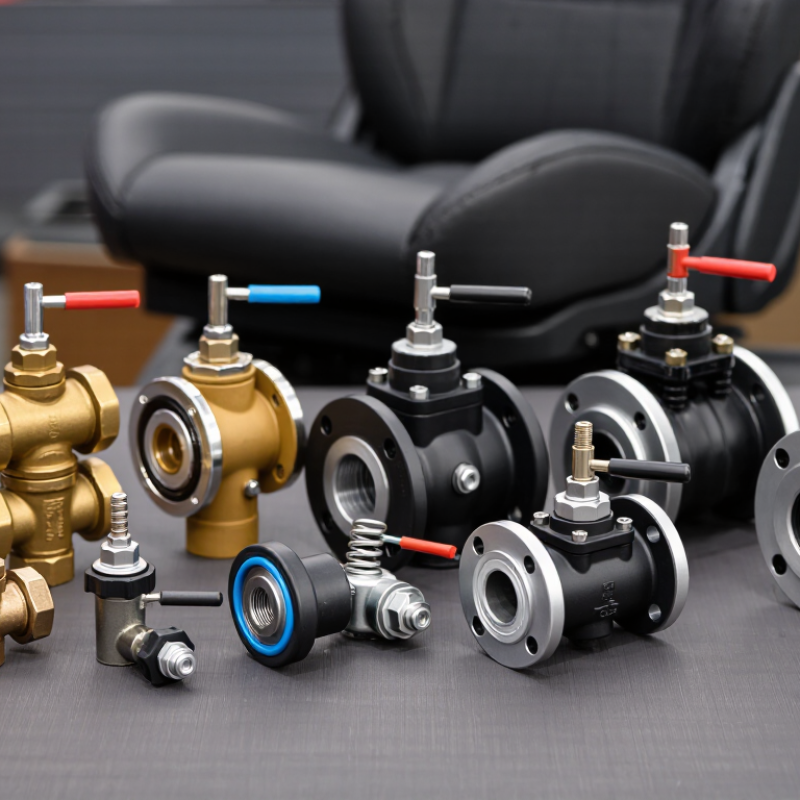
Truck Air Seat Control Valves: Functions, Structure, and Operating Principles
Truck Air Seat Control Valves: Functions, Structure, and Operating Principles
A truck air seat control valve regulates cushion height, pressure, and exhaust flow. Common types include height valves, pressure-reducing valves, dump valves, isolation valves, rotary valves, and solenoid valves. Fast-fill, exhaust, dual-circuit, and leveling designs complete the main ten types. Inside, a spool, diaphragm, spring, and calibrated ports guide compressed air. The driver’s weight moves the suspension linkage. The valve then admits or releases air until the seat reaches its set height.
The operating principle is simple, but the details are not. A height valve senses seat movement through a small lever. When the seat drops, inlet air raises the bellows. When it rises too far, the exhaust port opens. A pressure valve limits force during adjustment. A dump valve quickly lowers the seat during vehicle entry. Eurostat reported about 1,920 billion tonne-kilometres of EU road freight in 2023. That workload makes stable seating and durable controls practical maintenance priorities. Yet, one assumption deserves review: a high-quality valve cannot correct damaged air lines, incorrect linkage angles, or contaminated air.
Tips: Match the valve to the seat’s pressure range and mounting geometry. Check response time, port size, exhaust noise, and cold-weather sealing. ISO 2631-1 remains a useful reference for evaluating whole-body vibration exposure. During inspection, move the seat slowly and listen for leakage. Small leaks often appear before visible damage. Measured results are better than guesswork.
The Ten Main Valve Types Used in Truck Air Suspension Seats
Top 10 Truck Air Seat Control Valve Types for Global Buyers
Truck air suspension seats rely on ten practical valve types: leveling, pressure relief, check, dump, quick-exhaust, flow-control, shuttle, solenoid, proportional, and pressure-regulating valves. Each affects seat height, pressure stability, or adjustment speed. A leveling valve keeps the cushion near its target height. A pressure-relief valve prevents excessive air loading. Check valves protect stored pressure during hose damage. Dump and quick-exhaust valves release air quickly when drivers lower the seat. Flow-control valves soften movement. Shuttle valves select between air paths. Solenoid and proportional valves support electrical or fine adjustment. Pressure regulators maintain a usable supply.
The global automotive air suspension market was valued at about USD 7.7 billion in 2023, according to Grand View Research, with continued growth forecast through 2030. That trend increases demand for compact, durable seat controls. However, market reports often combine suspension, seat, and chassis applications. Their figures should not be treated as seat-valve sales alone. In field inspections, contamination and small leaks remain common failure causes. A clean fitting can matter more than a higher pressure rating.
Tips: Match the valve to the seat’s measured air volume, thread standard, response speed, and working pressure. Check exhaust noise near the driver’s ear. Test cold-start performance, not only workshop temperature. Do not assume every “universal” valve fits every seat. That shortcut often creates slow height recovery or uneven cushioning. Document pressure readings before replacing parts. Better data prevents guesswork.
How Truck Air Seat Control Valves Differ by Adjustment and Sensing Method
Truck air seat control valves vary mainly by adjustment method and sensing method. For global buyers, ten practical types often appear: manual height valves, paddle valves, lever valves, push-button valves, rotary valves, preset valves, weight-sensitive valves, pressure-sensing valves, mechanical self-leveling valves, and electronic air-control valves.
Manual valves let drivers raise or lower the seat with direct input. Paddle and lever designs work well with gloves and limited cabin space. Push-button and rotary controls offer finer height adjustment, but their small internal passages may react slowly in cold weather. Preset valves repeat a selected position, although calibration can drift after long use. Mechanical self-leveling valves use linkage movement to maintain seat height. They are simple, visible, and easier to inspect.
Weight-sensitive valves respond to occupant load, not just seat position. Pressure-sensing valves monitor air pressure inside the suspension chamber. This can improve comfort when road shock changes quickly. Electronic valves may combine pressure sensors with programmed adjustment, but they need protected wiring and accurate diagnostics. In workshop checks, I look for delayed return, air leakage, cracked tubing, and unstable seat height. Small details matter.
One caution remains. A valve that feels smooth may still measure poorly. Test it under different loads, temperatures, and air pressures before approval. Specifications alone are not enough.%timeout
Global Buyer Criteria for Comparing Valve Performance and Compatibility
Global truck fleets rarely need the same air seat control valve. Road conditions, cab design, and service habits change the choice. Ten useful types include height-control, dump, leveling, pressure-protection, relay, quick-release, check, solenoid, manual, and multifunction valves.
Global buyers should compare operating pressure, air-flow rate, response time, and adjustment range. A valve may fit the seat but still perform poorly with a restricted air line. Check port sizes, mounting holes, thread standards, and hose connections before ordering. Compatibility also includes air quality. Moisture, oil, and winter temperatures can damage internal seals.
Measure comfort under real load. Test the seat with different driver weights and record height recovery after repeated impacts. Noise matters in long-haul cabins. A slow exhaust function can make height changes frustrating. A fast valve is not always better; aggressive movement may reduce comfort. That detail is easy to miss.
Ask for pressure-cycle data, material information, and inspection records. Confirm compliance with the truck maker’s technical requirements and local transport regulations. Field technicians often find that similar-looking valves use different internal springs. A catalog match can still fail. Keep one sample seat and compare the valve physically before placing a large order. No scorecard is perfect, especially when buyers overvalue low price and overlook service access.
International Standards, Installation Requirements, and Supplier Evaluation
Truck air seat control valves are commonly supplied as ten configurations: height-only, height-and-damping, leveling, dump, memory, rotary, push-button, cable-operated, electric-pneumatic, and integrated valve modules. Global buyers should verify function before comparing prices. OICA reported 93.5 million motor vehicles produced worldwide in 2023. That scale increases the need for stable specifications and traceable batches.
Installation must match the vehicle’s pneumatic circuit, not only the seat model. Check port threads, working pressure, temperature range, airflow direction, and exhaust clearance. ISO 4414 provides safety principles for pneumatic systems, while ISO 1219 supports consistent fluid-power symbols. For braking-related applications, UNECE Regulation No. 13 remains a critical reference. Seat controls should not interfere with regulated braking circuits. A clean airline matters. Dust or oil can make a new valve feel defective within weeks.
Supplier evaluation needs more than an ISO certificate. The ISO Survey 2023 recorded over one million ISO 9001 certificates globally, yet certification does not prove every valve is reliable. Request pressure-cycle results, leak-test limits, material declarations, change-control records, and batch traceability. PPAP or equivalent documentation is useful for repeat production. A practical sample test should include cold starts, repeated height adjustment, and vibration exposure. Field technicians often find installation torque overlooked. That detail can distort results. My own view is slightly cautious: laboratory data helps, but a supplier that cannot explain failure handling may still be a poor choice.