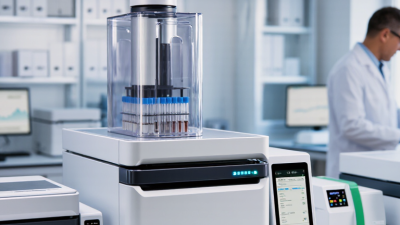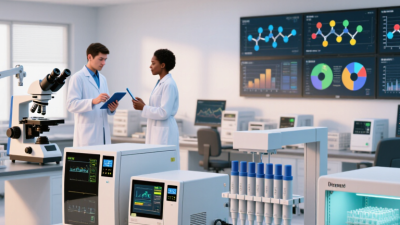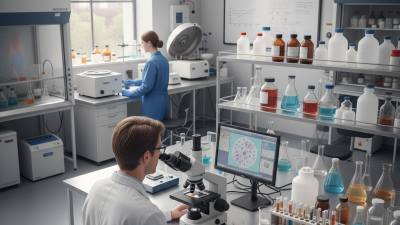
Choosing Pcr Equipment for an international laboratory involves more than comparing prices and advertised cycle speeds. A reliable instrument should provide stable temperatures, repeatable results, and clear software controls. It must also match the laboratory’s workflow, power supply, available space, and technical skills. A compact unit may suit a teaching laboratory, while a high-throughput platform may better support a busy testing facility. The best purchase depends on actual use. Not marketing alone.
This guide examines ten PCR systems from a global buyer’s perspective. It considers thermal uniformity, sample capacity, fluorescence channels, software usability, and maintenance requirements. Practical details matter. For example, a laboratory may need a 96-well block, a quiet fan, or simple export functions for result reports. Local voltage compatibility can prevent expensive installation problems. Regional service centers and replacement-part availability also deserve careful attention. A low purchase price may become costly when support is slow.
The selected models are not presented as universal winners. Every laboratory has different budgets, workloads, regulatory expectations, and operator experience. Some instruments offer advanced automation but require more training. Others provide dependable core performance with fewer features. That trade-off needs honest evaluation. Specifications should be verified through manufacturer documentation, independent reviews, and direct demonstrations where possible. User feedback is useful, but it can be incomplete. This overview aims to help procurement teams compare Pcr Equipment with greater confidence, while recognizing that the final decision should follow validated methods, qualified advice, and the laboratory’s long-term operating reality.
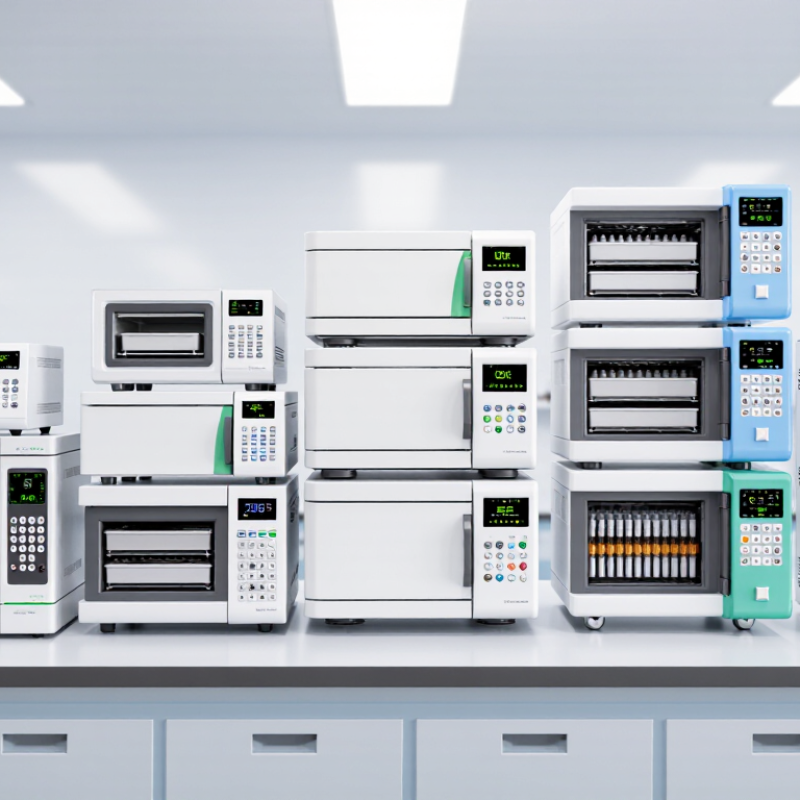
PCR equipment includes far more than a thermal cycler. A reliable setup may require a calibrated pipette, filtered tips, PCR tubes, a microcentrifuge, a vortex mixer, and a clean work area. Some laboratories also need a real-time detection system, depending on their testing goals. Each component affects accuracy. Small errors multiply.
A thermal cycler controls denaturation, annealing, and extension temperatures through repeated cycles. Uneven heating can produce weak or inconsistent amplification. Pipettes must deliver precise volumes, especially when reactions use only a few microliters. A centrifuge helps remove droplets from tube walls before cycling. This simple step reduces avoidable variation. It is easy to overlook.
Global buyers should examine temperature uniformity, calibration records, replacement parts, voltage compatibility, and service support. Equipment specifications may look impressive, yet daily operation tells a different story. An intuitive interface, stable software, and easy cleaning can save valuable laboratory time. Local training also matters when technicians have different experience levels.
The correct configuration depends on workload, sample type, laboratory space, and regulatory requirements. A small research team may not need the most advanced detection platform. An overstated system can increase maintenance costs without improving results. That deserves honest review. Buyers should request performance data, warranty terms, installation conditions, and independent user feedback before purchasing. A careful checklist often reveals practical limitations that brochures omit.
10 Best PCR Equipment for Global Buyers
Before comparing PCR equipment, define the test you will run every day. A research laboratory may need flexible cycling conditions. A diagnostic workflow may require controlled heating, clear fluorescence channels, and traceable results. Write the sample type, reaction volume, expected throughput, and detection method. Do not purchase based on maximum well count alone.
Check temperature uniformity, ramp speed, block format, and compatible consumables. Ask for calibration records and independent performance data. Confirm whether the software exports raw files in usable formats. For busy laboratories, a simple interface can reduce training mistakes. For global buyers, review voltage options, local service coverage, spare parts, and delivery conditions. A technically strong instrument can still become impractical without support.
Contamination control matters. Look for sealed workflows, suitable optical design, and easy-to-clean surfaces. Request installation guidance, operator training, and preventive maintenance schedules. My own early checklist was too narrow; I focused on specifications and overlooked service response time. That mistake can stop a project for days. Leave room for future assays, but avoid paying for features your team cannot validate. Test representative samples before approval, preferably under normal laboratory temperature and workload. Real use reveals weaknesses.
Sample capacity is one of the first requirements to define when selecting PCR equipment. The chart compares widely used thermal cycler block formats and helps buyers match throughput with project size, laboratory space, and expected testing volume.
Common block formats include 24-, 48-, 96-, and 384-well systems. Buyers should also verify temperature range, heating and cooling speed, temperature uniformity, gradient capability, consumable compatibility, software functions, and service support before purchasing.
The 10 Best PCR Equipment Options for Global Buyers should match workflow, sample volume, and local service conditions. A conventional thermocycler suits routine amplification and teaching laboratories. A gradient thermocycler helps optimize primer temperatures without repeated runs. Real-time qPCR systems support quantitative testing, gene expression studies, and melt-curve analysis. Digital PCR offers highly sensitive target measurement, although its consumable costs can be significant.
For limited space, a compact or portable thermocycler may be practical. High-throughput PCR systems benefit laboratories processing many plates each day. Automated liquid handlers reduce pipetting variation and operator fatigue. Integrated extraction-PCR platforms shorten sample preparation, but they may limit method flexibility. A microfluidic PCR system can reduce reagent use and turnaround time. For demanding workflows, a modular system allows future upgrades. No ranking is perfect. Actual performance depends on calibration, assay design, and staff training.
Tips: Check voltage, plug type, temperature uniformity, ramp speed, software language, and data export options before purchasing. Request verification records and ask how often preventive maintenance is required. Confirm that replacement parts and qualified technicians are available in your region. Test the instrument with representative samples, not only supplied standards. Keep a small budget for validation because the cheapest option can create expensive delays. Some buyers overlook installation space, ventilation, and backup power. That mistake is common.
For global buyers, the “best” PCR equipment is rarely the fastest model. It is the system that delivers stable results under local conditions. Grand View Research’s 2024 market analysis valued the global PCR market at approximately USD 11 billion in 2023, with continued growth expected through 2030. That expansion creates more choices, but also more comparison errors.
Start with performance data, not brochure claims. Review temperature uniformity, ramp rate, optical sensitivity, well-to-well consistency, and usable throughput. The MIQE guidelines stress transparent reporting of assay conditions and controls. Ask suppliers for verification records using your intended plastics, reagents, and sample volumes. A ten-second faster cycle may matter less than reliable amplification across a full plate. Small differences become expensive.
Compatibility deserves equal attention. Check voltage, plug standards, software language, network requirements, service availability, and consumable supply. ISO 20395:2019 highlights the importance of validating nucleic-acid amplification measurement systems for their intended use. A technically impressive instrument may fail operationally if local engineers cannot repair it. That risk is easy to underestimate.
Calculate total cost over five years. Include instrument price, calibration, software licenses, replacement parts, service visits, energy use, and failed runs. ENERGY STAR laboratory guidance shows that laboratory equipment can contribute significantly to facility energy demand, although PCR energy varies by model and workload. I would not trust a single vendor’s estimate. Build a scenario with low, normal, and peak sample volumes. The cheapest purchase can become the costliest choice.
| Rank | Equipment Profile | Primary Application | Block Format | Sample Throughput | Temperature Range | Maximum Ramp Rate | Gradient Function | Typical Reaction Volume | Consumable Compatibility | Detection Capability | Indicative Purchase Price | Estimated 5-Year TCO | Best-Fit Buyer |
|---|---|---|---|---|---|---|---|---|---|---|---|---|---|
| 1 | 96-Well Gradient Thermal Cycler | Routine endpoint PCR and assay optimization | 96 × 0.2 mL wells | Up to 96 reactions/run | 4–99.9 °C | Up to 5 °C/s | Yes; typically 8–12 zones | 10–100 µL | Standard 0.2 mL tubes, 8-strip tubes, and 96-well plates | Fluorescence not included | US$4,000–12,000 | US$13,000–28,000 | Academic, clinical research, and general molecular laboratories |
| 2 | 384-Well High-Throughput Thermal Cycler | Large-scale endpoint PCR and library preparation | 384 × 0.02 mL wells | Up to 384 reactions/run | 4–99.9 °C | Up to 5 °C/s | Usually limited or unavailable | 5–20 µL | 384-well PCR plates and compatible sealing films | Fluorescence not included | US$9,000–25,000 | US$25,000–58,000 | Core facilities and laboratories processing high sample volumes |
| 3 | Dual-Block Independent Thermal Cycler | Running two protocols at the same time | Two independent blocks; commonly 2 × 48 wells | Up to 96 reactions/run | 4–99.9 °C | Up to 5 °C/s | Often available on each block | 10–100 µL | 0.2 mL tubes, strip tubes, and compatible plates | Fluorescence not included | US$7,000–18,000 | US$18,000–39,000 | Multi-project laboratories with changing daily workflows |
| 4 | Compact Portable Thermal Cycler | Field testing, teaching, and low-volume PCR | 16–32 wells; format varies | 16–32 reactions/run | 0–100 °C or near-equivalent operating range | Typically 2–5 °C/s | Usually unavailable | 5–25 µL | Small tubes, strip tubes, or dedicated microplates | Some units support basic fluorescence | US$1,500–8,000 | US$5,000–17,000 | Mobile laboratories, education, and decentralized testing |
| 5 | Fast 96-Well Thermal Cycler | Rapid endpoint PCR and time-sensitive workflows | 96 × 0.2 mL wells | Up to 96 reactions/run | 4–99.9 °C | Up to 8–10 °C/s | May be available in selected models | 5–30 µL | Fast-compatible plates and tubes; standard plastics may also work | Fluorescence not included | US$8,000–22,000 | US$20,000–47,000 | Laboratories prioritizing short cycle times and high daily utilization |
| 6 | 96-Well Real-Time PCR System | Quantitative PCR, genotyping, and melt-curve analysis | 96 × 0.2 mL wells | Up to 96 reactions/run | 4–100 °C | Approximately 3–6 °C/s | Usually unavailable as a conventional gradient | 10–50 µL | Optical PCR plates, tubes, and compatible transparent seals | Usually 4–6 optical channels; melt-curve support varies | US$25,000–75,000 | US$65,000–160,000 | Diagnostic research, gene-expression studies, and assay development |
| 7 | 384-Well Real-Time PCR System | High-throughput quantitative PCR and screening | 384 × 0.02 mL wells | Up to 384 reactions/run | 4–100 °C | Approximately 3–6 °C/s | Usually unavailable | 5–20 µL | Optical 384-well plates and compatible sealing films | Typically 4–6 optical channels | US$45,000–120,000 | US$110,000–250,000 | Screening centers and laboratories with high assay volumes |
| 8 | Digital PCR Platform | Absolute nucleic-acid quantification and rare-target detection | Partition-based consumable; commonly 20,000+ partitions/sample | Often 8–96 samples/run, depending on configuration | Thermal cycling typically 4–99 °C | Instrument-specific; commonly 2–5 °C/s | Usually unavailable | Manufacturer-specific partition volume | Dedicated cartridges, chips, plates, or droplet consumables | Multiplex fluorescence; channel count varies | US$70,000–180,000 | US$180,000–450,000 | Low-copy-number, copy-number-variation, and liquid-biopsy research |
| 9 | Integrated Sample-to-Answer PCR System | Automated extraction, amplification, and result generation | Dedicated single-use cartridge or cassette | Usually 1–24 tests/run | Pre-programmed thermal profile | Not normally user-adjustable | No user gradient | Cartridge-defined | Proprietary or dedicated disposable cartridges | Qualitative or quantitative fluorescence, depending on assay | US$20,000–150,000 | US$120,000–600,000 | Decentralized testing where speed and workflow simplicity are priorities |
| 10 | Open-Protocol Block Cycler with USB/LIMS Connectivity | Flexible research protocols and regulated data workflows | 96 × 0.2 mL wells or interchangeable block | Up to 96 reactions/run | 4–99.9 °C | Approximately 3–6 °C/s | Often available | 10–100 µL | Standard tubes, strip tubes, and 96-well plates | Fluorescence usually not included | US$6,000–20,000 | US$16,000–42,000 | Facilities requiring protocol traceability, export, and system integration |
Comparison note: The figures are representative market ranges and commonly published specification bands for equipment classes, not manufacturer-specific quotations. Actual performance, compatibility, service coverage, import duties, validation requirements, consumable costs, and software licensing should be confirmed with the supplier before purchase. Estimated five-year total cost of ownership includes the instrument, routine service, calibration, software or connectivity costs where applicable, and typical consumables, but excludes laboratory construction and personnel costs.
For global buyers, the 10 best PCR systems are not simply the fastest or cheapest. MarketsandMarkets’ PCR report projects roughly 8% market growth through 2028, increasing supplier choices and verification risks. A reliable buyer should request the exact model’s declaration of conformity, electrical safety testing, electromagnetic compatibility results, and calibration records. IEC 61010-1 and IEC 61326-1 are useful reference standards, while medical applications may require additional national registration. ISO 13485 certification can support quality control, but it does not automatically prove PCR accuracy.
Supplier checks should include batch traceability, installation qualification, operational qualification, and documented acceptance testing. Ask for raw performance data, not only polished brochures. Test temperature uniformity across the block. Review fluorescence consistency, software audit trails, and error recovery. ISO’s 2023 Survey reported more than one million ISO 9001 certificates worldwide, yet certification alone cannot confirm a supplier’s technical competence. That distinction matters.
After-sales support often decides the real cost. Require written response times, remote diagnostics, spare-part availability, firmware controls, and local engineer coverage. Confirm who pays for travel, recalibration, and replacement modules. A two-year warranty may sound strong. Read the exclusions carefully. Ask for three recent service references in comparable environments. I would also request a preventive-maintenance schedule and training records. Some suppliers provide excellent instruments but weak documentation. That is easy to miss before purchase. A practical scorecard should weight compliance evidence, service capability, total downtime risk, and local support—not headline throughput alone.