How to Choose the Right PCR Lab Equipment for Your Research Needs?
Choosing the right PCR lab equipment is crucial for research success. Dr. Emily Thompson, a leading expert in molecular biology, once stated, “The precision of your PCR results depends heavily on the quality of your lab equipment.” This highlights the importance of selecting reliable devices for your experiments.
When navigating the world of PCR lab equipment, researchers must consider various factors. Equipment such as thermal cyclers, pipettes, and electrophoresis systems must meet specific standards. It's easy to overlook how outdated devices can lead to inconsistent results. Investing in high-quality equipment can make a significant difference in accuracy and efficiency.
Moreover, the range of options can be overwhelming. Each piece of equipment may serve different purposes and budgets. Balancing cost, reliability, and performance is challenging. Researching user reviews and consulting experienced colleagues can provide valuable insights. Ultimately, the right choice can elevate your research and contribute to breakthrough discoveries.
Understanding PCR Technology and Its Applications in Research
PCR technology has transformed molecular biology research, enabling the amplification of specific DNA sequences. This technique plays a critical role in
diagnostics, gene cloning, and
forensic analysis. It is essential for researchers to understand its applications and the equipment necessary for effective experimentation.
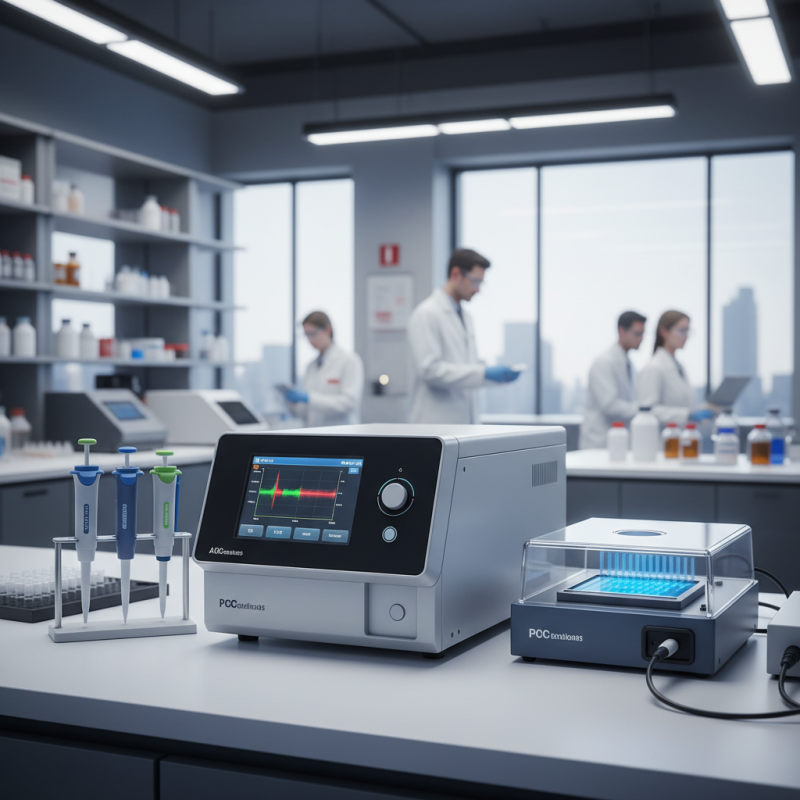
When selecting PCR lab equipment, consider your specific research needs. A reliable thermal cycler ensures precise temperature control for optimal amplification. The choice of consumables, such as high-quality reagents and tubes, can greatly impact your results. An often-overlooked detail is the calibration of your equipment. Regular checks can prevent variability in your experiments.
Tip: Evaluate your lab's workflow. Invest in equipment that aligns with your research goals. Do not underestimate the importance of user-friendly software for data analysis. It can save precious time and enhance accuracy.
Another point to reflect on is the environment where PCR takes place. Contamination is a common issue that can lead to erroneous results. Proper training in lab protocols can mitigate these risks. Keeping a clean workspace and having dedicated areas for pre- and post-PCR procedures are vital for reliable outcomes.
Tip: Keep a record of all experiments. This can help identify patterns and troubleshoot issues. Regular reviews of your methods can lead to insightful adjustments.
Key Factors to Consider When Selecting PCR Lab Equipment
When choosing PCR lab equipment, several key factors must be considered. The accuracy and precision of the equipment are paramount. Look for machines with reliable temperature control and calibration features. These aspects ensure reproducible results, which is crucial for research integrity. Additionally, consider the sample capacity. Ensure the equipment can handle the volume of samples you typically analyze.
Another vital factor is the ease of use. Complex interfaces can lead to errors. Equipment should have a user-friendly design, enabling straightforward operation. Training staff can be time-consuming, so intuitive systems save time and reduce mistakes. Furthermore, maintenance requirements must be assessed. High-maintenance equipment can strain your budget and resources.
Budget constraints are unavoidable in research. It’s tempting to opt for the cheapest option. However, investing in quality equipment often pays off through better results and fewer errors. Reflect on your long-term research goals. Will you need to upgrade soon? Weigh the cost against potential needs. Choosing the right PCR lab equipment demands thoughtful consideration of these aspects.
Types of PCR Equipment: An Overview of Essential Tools
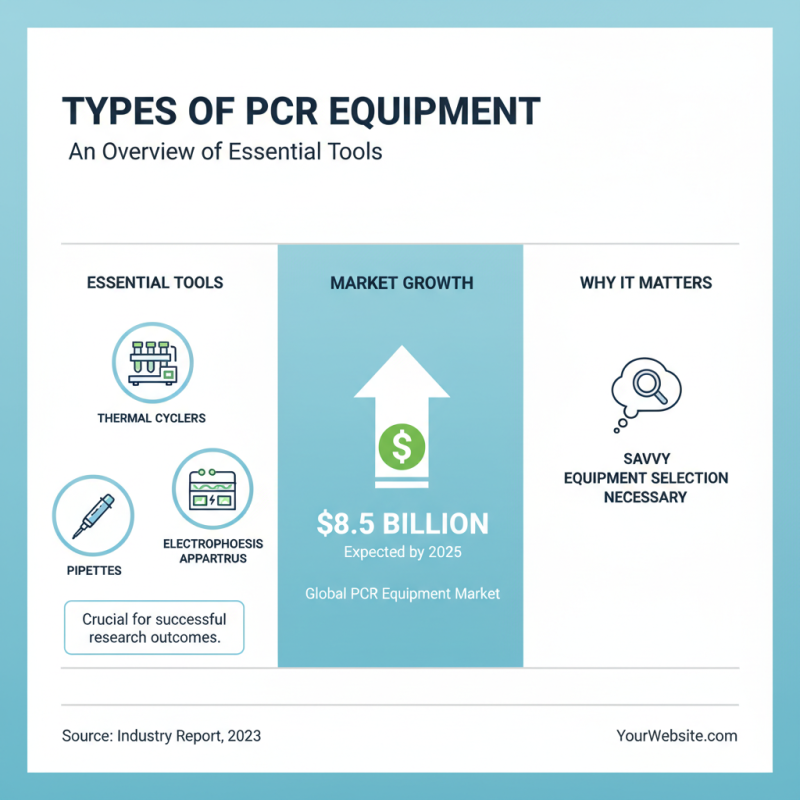
Choosing the right PCR lab equipment is crucial for successful research outcomes. Essential tools include thermal cyclers, pipettes, and electrophoresis apparatus. According to a recent industry report, the global PCR equipment market is expected to reach $8.5 billion by 2025, highlighting the necessity for savvy equipment selection.
Thermal cyclers, often referred to as PCR machines, are pivotal. They control the temperature cycles required for DNA amplification. Quality matters: a reliable thermal cycler produces consistent results. This could make or break your experiment.
Pipettes are another fundamental tool. Choosing precise, easy-to-use pipettes is essential for accurate sample handling. Inaccurate pipetting can lead to poor data quality. Lastly, electrophoresis apparatus is vital for analyzing PCR products. Investing in high-quality equipment ensures better resolution and clarity.
Tip: Evaluate the specifications of each piece of equipment carefully. Look for user reviews and performance data. This will help you avoid common pitfalls in your lab setup. Quality is key, so prioritize proven reliability in your equipment choices.
Assessing Quality and Reliability of PCR Equipment Manufacturers
When selecting PCR lab equipment, assessing the quality and reliability of manufacturers is critical. A recent industry report noted that 55% of researchers prioritize equipment durability. This statistic underscores the importance of choosing manufacturers with a proven track record. Look for companies that have been in the business for several years, showcasing their ability to innovate and maintain quality standards.
Check certifications and compliance with international standards. Equipment that meets ISO and CE certifications tends to be more reliable. In addition, research customer feedback and product reviews. Surveys indicate that 70% of users value peer recommendations when selecting PCR equipment. These insights can lead you to brands known for their consistency and support, but realize that experiences can vary.
It's also essential to consider after-sales support and warranty options. Many labs report frustration due to limited assistance post-purchase. Some manufacturers may not provide adequate training or troubleshooting guidance. Keeping these factors in mind helps you make an informed decision. Balancing performance and supplier reliability is ongoing, often requiring adjustments as technology evolves.
Comparison of PCR Lab Equipment by Reliability and Quality
Budgeting and Cost Considerations for Your PCR Lab Setup
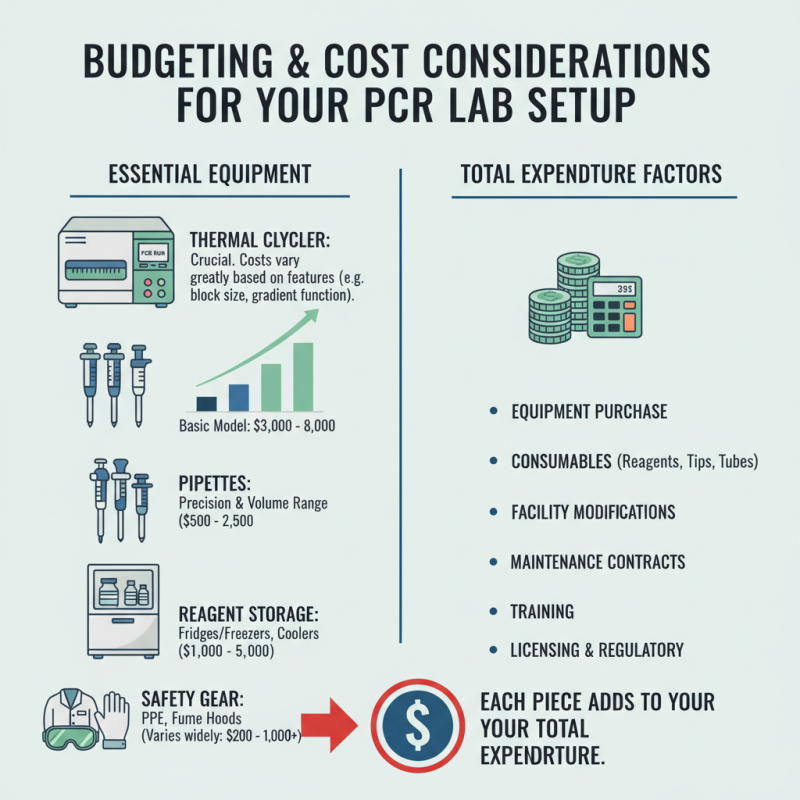
Budgeting for a PCR lab setup can be complex. First, you must identify essential equipment. A thermal cycler is crucial. Costs vary significantly based on features. Look for models that fit both your needs and budget. Don’t overlook other equipment, such as pipettes, reagent storage, and safety gear. Each piece adds to your total expenditure.
Consider ongoing costs, too. Consumables can add up. Think about how much you will need over time. Prices for reagents and plastics often fluctuate. It’s wise to keep a reserve budget for unexpected expenses. The financial aspect can evoke anxiety, especially for newcomers. Reflect on your priorities. What equipment can wait?
Evaluate your lab’s specific goals. Sometimes, skimping on certain tools can lead to compromised results. Balancing quality and cost is vital. Prioritizing your major experiments can also help you allocate resources better. Investing wisely today can yield valuable data tomorrow.