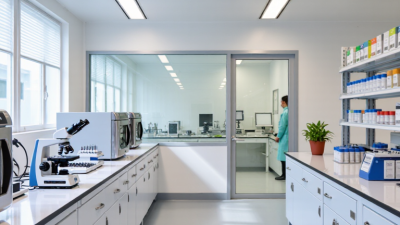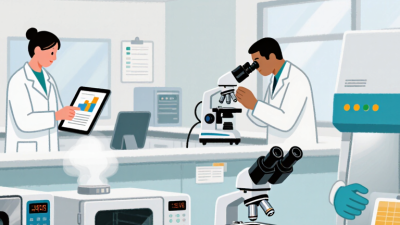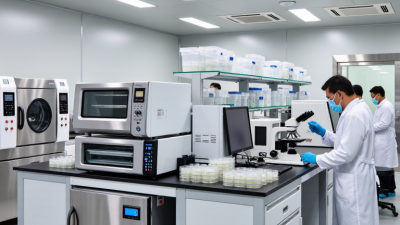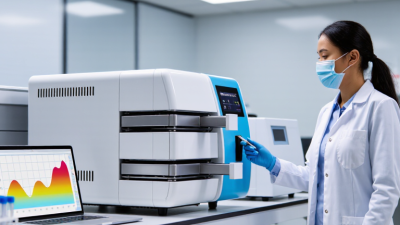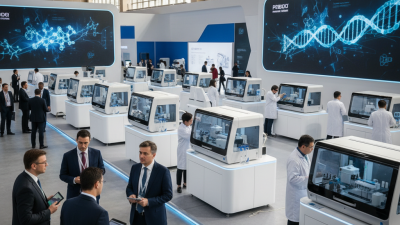
Microbiology Equipment is the practical foundation of routine testing, from incubators holding cultures at stable temperatures to autoclaves and colony counters. For buyers comparing China’s suppliers, product range matters, but so do calibration records, service access, spare-parts availability, and clear technical documentation. A polished catalogue is useful. It is not proof of dependable performance.
Grand View Research estimated the global microbiology testing market at USD 5.17 billion in 2023 and projected it to reach USD 8.08 billion by 2030. This is an adjacent market indicator, not a measurement of equipment sales. Still, it signals sustained demand for reliable laboratory workflows. Louis Pasteur, a pioneer of microbiology, wrote, “In the fields of observation, chance favors only the prepared mind.” The familiar quotation is a reminder that sound results depend on preparation—and on tools that perform consistently.
This overview of China’s top ten Microbiology Equipment suppliers should be read as a starting point, not a final procurement verdict. Compare specifications against your actual protocols. Ask for test reports, warranty terms, installation requirements, and evidence of after-sales support. A supplier may excel in one instrument category and fall short in another. That distinction is easy to miss in a broad ranking. No list can replace a site evaluation or a careful review of the intended use.
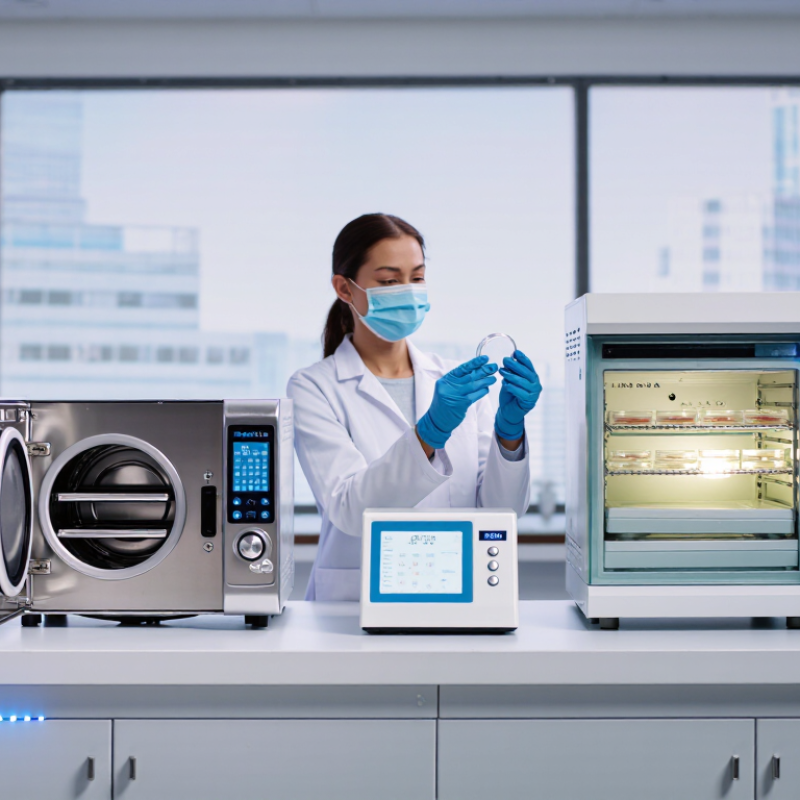
Microbiology equipment turns laboratory questions into observable evidence. Incubators maintain conditions for controlled microbial growth, while microscopes help researchers examine cell shape and arrangement. Autoclaves support sterilization, and pipettes enable measured liquid transfer. Each tool serves a different part of the workflow. Together, they help teams compare samples, repeat procedures, and document results. Small details matter: a temperature log, a clean work surface, or a correctly labeled tube can affect how data are interpreted. Equipment does not guarantee reliable findings. Staff training, routine maintenance, and validated procedures matter just as much.
Tips: Check calibration records before critical measurements. Keep equipment clean and serviceable. Record unusual readings instead of quietly correcting them. A simple logbook can reveal recurring temperature shifts or maintenance needs.
When selecting equipment, match its capacity and performance to the research task, available space, and staff experience. A crowded bench can make even suitable instruments awkward to use. Consider whether cleaning, routine checks, and replacement parts can be managed consistently. A neat equipment list can still hide a weak workflow, and that is easy to overlook. Researchers should review whether each instrument supports repeatable work, rather than choosing by specifications alone. Practical decisions often need revisiting as methods change.
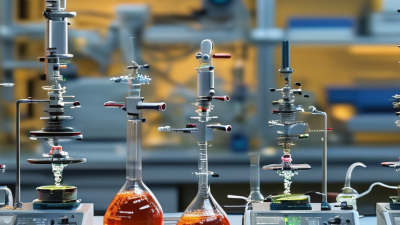
Selecting a microbiology equipment supplier in China should begin with the intended workflow, not a polished catalog. A teaching laboratory and a high-throughput testing site need different capacities, service intervals, and documentation. Ask for equipment specifications, installation requirements, and sample maintenance records. Details matter. Check whether claims about temperature uniformity, cycle time, or detection limits are supported by test reports.
Supplier evaluation should also cover quality systems, traceability, and staff competence. Request certificates relevant to the specific product, then verify their scope and validity rather than relying on logos. For critical instruments, ask how calibration is performed and whether spare parts and trained technicians are available locally. A fast quotation is not proof of dependable support.
Compare total ownership costs, including installation, consumables, calibration, and expected downtime. Where possible, review a demonstration using representative samples and record results against your own acceptance criteria. References from laboratories with similar workloads can reveal practical issues that brochures omit. No supplier is perfect. Vague answers about service response or performance limits deserve follow-up; one successful demonstration alone may not show how equipment performs over time.
Recommended evaluation weights for comparing suppliers. These are proposed procurement criteria, not measured scores or a ranking of specific companies.
Product quality and regulatory compliance receive the greatest weight, followed by technical fit and after-sales support. Buyers can adjust the weights to reflect equipment type, intended use, and procurement requirements.
China’s microbiology equipment suppliers span focused manufacturers and broader laboratory-system providers. These ten profiles describe common strengths rather than claim a verified ranking. One supplier specializes in incubators, with stable temperature control for routine culture. Another builds steam sterilizers, where chamber size and cycle records matter. A third focuses on biosafety cabinets, emphasizing airflow checks and accessible filters. A fourth supplies laboratory fermenters, with practical controls for temperature, pH, and mixing. A fifth offers microscopes suited to teaching and routine observation.
A sixth profile centers on colony counters, reducing repetitive manual counting. A seventh develops PCR instruments for molecular workflows. An eighth provides laboratory water systems, where routine maintenance can affect results. A ninth supplies environmental monitoring instruments for temperature and humidity tracking. A tenth integrates multiple equipment categories and installation support. Small details matter. China’s National Bureau of Statistics reported national R&D spending of 3.61 trillion yuan in 2024, equal to 2.68% of GDP, in its 2024 Statistical Communiqué. This broader research investment gives useful context, but it does not measure microbiology equipment sales. Buyers should compare calibration documentation, service response, spare-part access, and compatibility with existing benches. Supplier catalogs rarely reveal the full maintenance burden, and that gap deserves scrutiny.
This non-ranked overview presents ten common microbiology equipment specializations and their typical applications. Company names, brands, and company-specific rankings are intentionally omitted; the profiles are not claims about individual suppliers.
| Profile | Equipment Specialization | Typical Products | Common Laboratory Use | Key Procurement Checks |
|---|---|---|---|---|
| Profile 01 | Biological safety cabinets | Class I, Class II, and Class III cabinets | Containment for work involving biological materials; Class II cabinets are commonly used to protect the worker, the work, and the surrounding environment when operated appropriately. | Check the applicable cabinet standard, airflow and filter test documentation, installation requirements, and availability of field certification. |
| Profile 02 | Laboratory sterilization | Steam autoclaves, vertical autoclaves, and benchtop autoclaves | Moist-heat sterilization of suitable laboratory media, instruments, and waste loads using validated cycles. | Confirm chamber capacity, cycle types, load compatibility, temperature and pressure records, and local validation or service support. |
| Profile 03 | Incubation and temperature control | General-purpose, refrigerated, and shaking incubators | Maintaining controlled temperatures for microbial culture; shaking models also agitate liquid cultures. | Review usable capacity, temperature range and uniformity specifications, shaking speed range where applicable, and calibration options. |
| Profile 04 | Anaerobic culture systems | Anaerobic jars, workstations, and gas-generation accessories | Creating oxygen-reduced conditions for the cultivation and handling of anaerobic microorganisms. | Check the intended atmosphere, chamber or jar capacity, oxygen-monitoring method, compatible consumables, and operating procedures. |
| Profile 05 | Microbial colony counting | Manual, illuminated, and image-assisted colony counters | Counting visible colonies on culture plates to support enumeration workflows. | Assess plate-size compatibility, counting modes, image storage and export functions, and the laboratory’s method-validation needs. |
| Profile 06 | Culture-media preparation | Media preparators, dispensers, and laboratory media boilers | Preparing and dispensing culture media with controlled heating and mixing, depending on the equipment configuration. | Confirm batch volume, temperature control, mixing method, cleaning requirements, and compatibility with the media workflow. |
| Profile 07 | Microbiological filtration | Membrane filtration units, manifolds, and filter holders | Processing liquid samples through membranes for microbiological testing, including applications where organisms are retained for analysis. | Check membrane diameter and material compatibility, number of filtration positions, sterility requirements, and relevant test-method specifications. |
| Profile 08 | Microscopy and imaging | Bright-field microscopes, phase-contrast microscopes, and digital imaging systems | Observing microbial cells, stained preparations, and other specimens at magnification; imaging systems can capture observations for records. | Review optical configuration, illumination, camera compatibility, image-export options, and the magnification required for the intended method. |
| Profile 09 | Shaking and mixing | Orbital shakers, platform shakers, and tube rotators | Agitating liquid cultures or samples to support mixing and, where appropriate, aeration during microbial workflows. | Check speed range, platform capacity, vessel compatibility, temperature-control needs, and operating limits for the intended load. |
| Profile 10 | Microbiology quality-control monitoring | Temperature data loggers, environmental monitoring instruments, and particle counters | Recording or assessing selected environmental conditions in laboratories and controlled spaces; the appropriate instrument depends on the monitoring plan. | Verify measurement range, accuracy specifications, calibration traceability, data-export options, and suitability for the applicable monitoring protocol. |
Microbiology laboratories depend on equipment that supports controlled growth, safe handling, and accurate observation. Incubators maintain set temperatures for cultures, while orbital shakers keep liquid media moving. A small temperature fluctuation can change growth patterns. Details matter.
Biosafety cabinets help contain aerosols during sample preparation, but they must match the work and be maintained correctly. Autoclaves sterilize reusable materials; validated cycles and routine checks help confirm performance. Microscopes reveal cell shape and arrangement, while colony counters make plate results easier to record consistently. Not every task needs the same level of precision.
Pipettes, centrifuges, and cold-storage units support daily sample handling. Centrifuges separate components by speed and time, so balanced tubes and suitable settings are essential. Refrigerators preserve media and reagents within specified ranges, and temperature logs can flag problems before use. Even simple equipment can introduce variation when calibration or cleaning is overlooked. Choosing equipment should reflect sample volume, workflow, maintenance capacity, and staff training, not only purchase price. A realistic setup may be less impressive on paper, yet more dependable at the bench.
A useful comparison of China’s microbiology equipment suppliers goes beyond price. Check whether incubators hold stable temperatures, microscopes meet stated resolution, and autoclaves provide cycle records. Ask for calibration traceability, installation documents, and sample service response times. ISO’s 2022 Survey recorded 1,265,216 valid ISO 9001 certificates worldwide. This shows the standard’s broad use, not that every certified supplier’s equipment performs equally well. Inspect the actual certificates and verify their scope.
Quality documentation matters after delivery, too. For calibration work, ask whether the service laboratory is accredited to ISO/IEC 17025, and request a sample certificate. Compare warranty coverage, spare-parts availability, technician training, and support hours in your region. The World Health Organization’s Laboratory Quality Management System handbook describes 12 quality system essentials, including equipment management and corrective action. Use these as practical checkpoints, not as a substitute for testing equipment under your own laboratory conditions. Paperwork can look complete. The details may still disappoint.
Tips: Request a written service-level commitment and a demonstration using your routine workload. Keep one real-world question open: how quickly can the supplier restore operation when a critical unit fails?