Why Choose PCR Lab Equipment for Global Labs?
Why choose Pcr Lab Equipment for global laboratories? The answer extends beyond amplification speed or attractive pricing. Reliable equipment supports accurate testing, stable workflows, and consistent results across different healthcare environments. This matters when laboratories serve crowded hospitals, rural clinics, and mobile testing units.
The global PCR market reflects this continuing demand. MarketsandMarkets estimated the market at approximately USD 9.1 billion in 2023. Its report projected growth to about USD 13.8 billion by 2028. Grand View Research also identified rising molecular diagnostics adoption as a major market driver. These figures suggest opportunity, but they do not guarantee product quality. Each laboratory still needs evidence.
Experience often exposes the real differences. A busy technician needs clear software, fast temperature control, and simple maintenance. A regional laboratory may need voltage compatibility, durable components, and dependable technical support. These details become important when samples arrive in sealed racks at 6 p.m. and reporting cannot wait. They also support quality systems aligned with ISO 15189 principles and relevant World Health Organization laboratory guidance.
Performance must be verified.
A credible supplier should provide validation data, calibration records, training, and transparent warranty terms. Laboratories should also examine contamination control, thermal uniformity, service availability, and consumable compatibility. The cheapest system may create expensive delays. That assumption deserves testing.
Choosing Pcr Lab Equipment is therefore a practical risk decision, not merely a purchasing decision. Global laboratories need instruments that perform consistently, document results clearly, and remain supportable after installation. No platform is perfect. Careful comparison, local user feedback, and documented verification still matter.
PCR Equipment Basics: Thermal Cycling from 95°C Denaturation to 60°C Annealing
Why Choose PCR Lab Equipment for Global Labs?
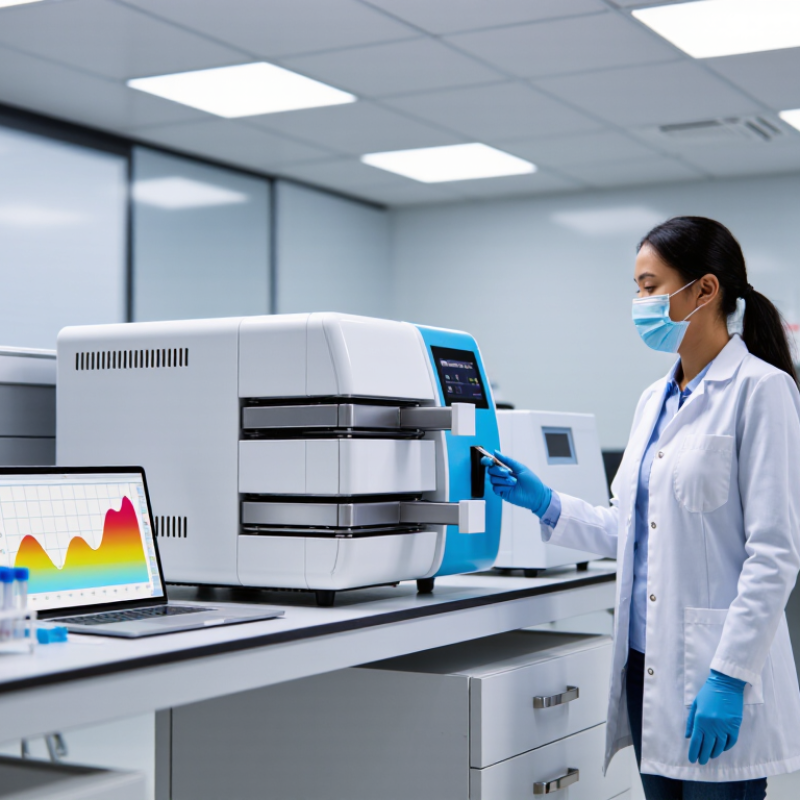
PCR equipment turns a small genetic signal into measurable evidence. The process begins near
95°C, where heat separates double-stranded DNA. This step must be consistent across every well. Uneven heating can create weak or misleading results.
The temperature then falls toward 60°C for primer annealing. At this point, primers attach to matching target sequences. The exact temperature depends on primer design, salt concentration, and instrument calibration. Small differences matter. A 1°C shift can change specificity in sensitive assays. Experienced technicians check melt curves, controls, and amplification efficiency instead of trusting one output.
According to the 2024 MarketsandMarkets PCR market report, the global PCR market was estimated at more than USD 11 billion in 2023. This growth reflects wider demand for reproducible molecular testing. ISO 20395 also emphasizes validated performance, traceability, and suitable measurement controls. Those principles matter in laboratories with different climates, power systems, and skill levels.
A practical setup needs stable block temperature, clear programming, and simple maintenance. It should also support documented calibration.
The MIQE guidelines recommend reporting reaction conditions, controls, and efficiency data. That sounds routine, but many protocols still omit important details. Perfect cycling is not guaranteed by expensive equipment. Users must verify denaturation, annealing, and extension conditions with real samples.
Performance Selection Using the MIQE 90–110% Amplification Efficiency Standard
Why Choose PCR Lab Equipment for Global Labs?
Global laboratories need PCR systems that perform consistently across climates, operators, and sample types. MIQE guidance defines acceptable amplification efficiency as 90–110%, equivalent to a slope near −3.32 in a standard curve (Bustin et al., Clinical Chemistry, 2009). This range supports reliable quantification. It also exposes weak assay design.
In daily testing, equipment selection should begin with measurable control. Check temperature uniformity, optical stability, calibration records, and pipetting precision. A five-point, tenfold dilution series should produce a near-linear curve, with R² commonly targeted at 0.99 or higher. The Clinical and Laboratory Standards Institute highlights traceability and verification as core elements of molecular testing quality (CLSI MM06, 2016). Small differences matter. A drifting lid temperature can change Ct values across a full plate.
Published market analyses continue to forecast strong global growth for PCR and qPCR instrumentation, driven by infectious disease testing, research, and decentralized laboratories (MarketsandMarkets, PCR Technologies Market Report, 2024). However, market growth does not guarantee reliable results. I have seen instruments pass basic startup checks while producing uneven edge wells. That result deserves investigation, not excuses. A practical laboratory should compare efficiency across operators, reagents, and seasonal conditions. The 90–110% window is useful, but it is not a complete quality system. It can hide poor specificity, inhibition, or inconsistent extraction. Reliable equipment makes these weaknesses visible.
Throughput Planning with 96-Well Formats and Multiplex Assay Capacity
Why Choose PCR Lab Equipment for Global Labs?
A 96-well PCR format provides 96 reaction positions per run. In practice, capacity is lower. Reserving 12 wells for standards, controls, and repeats leaves 84 test positions. That simple calculation prevents optimistic scheduling. A laboratory processing 10 plates daily could theoretically run 840 tests, before extraction delays, maintenance, and failed reactions. Real throughput is often less.
Multiplex assays can increase information per well by detecting several targets together. However, more targets also increase competition for primers, probes, fluorescence channels, and reagent balance. The MIQE guidelines, published in Clinical Chemistry, require transparent reporting of efficiency, controls, and assay conditions. These details matter when comparing results across countries or laboratories. A crowded fluorescence plot is not proof of a reliable assay.
Validation should reflect actual workload. CLSI EP05-A3 describes a precision design using two runs per day, two replicates per run, across 20 days. That means 80 results per level, before broader interference studies. I often see teams plan around maximum plate capacity, then discover bottlenecks at pipetting or data review. The better approach is to map every step, from sample accession to result release. Leave space for repeats. Small errors become expensive at scale.
Why Choose PCR Lab Equipment for Global Labs? - Throughput Planning with 96-Well Formats and Multiplex Assay Capacity
| Planning Metric |
Standard 96-Well Format |
Singleplex Scenario |
Duplex Scenario |
4-Plex Scenario |
8-Plex Scenario |
| Well capacity per plate |
96 wells |
96 wells |
96 wells |
96 wells |
96 wells |
| Plate geometry |
8 rows × 12 columns |
8 rows × 12 columns |
8 rows × 12 columns |
8 rows × 12 columns |
8 rows × 12 columns |
| Wells reserved for controls |
16 |
16 |
16 |
16 |
16 |
| Sample wells available per plate |
80 |
80 |
80 |
80 |
80 |
| Targets measured per sample |
Not applicable |
1 |
2 |
4 |
8 |
| Target results generated per plate |
Not applicable |
80 |
160 |
320 |
640 |
| Plates required for 240 samples |
3 |
3 |
3 |
3 |
3 |
| Total target results for 240 samples |
Not applicable |
240 |
480 |
960 |
1,920 |
| Required optical detection channels |
Depends on assay |
At least 1 validated channel |
At least 2 validated channels |
At least 4 validated channels |
At least 8 validated channels |
| Primary throughput advantage |
Standardized plate handling |
Simple assay setup |
Twice the target output per sample well |
Four target measurements per sample well |
High information density per sample well |
Planning basis: Calculations assume 96 total wells per plate, 16 wells reserved for controls, and 80 sample wells available. Multiplex capacity depends on validated optical channels, fluorophore compatibility, assay chemistry, spectral compensation, and laboratory quality requirements. The multiplex values shown are planning scenarios rather than universal instrument limits.
Global Quality Control Aligned with ISO 15189 Laboratory Requirements
Why Choose PCR Lab Equipment for Global Labs?
Global Quality Control Aligned with ISO 15189 Laboratory Requirements
Reliable PCR testing begins with controlled equipment, not impressive specifications alone. Laboratories in different regions need stable thermal cycling, accurate temperature monitoring, and clear maintenance records. These features support the quality management principles described in ISO 15189. They also help teams compare results across sites. A well-designed workflow reduces contamination risks and makes daily checks easier to document.
In practice, staff should verify instrument performance with defined controls, calibration schedules, and acceptance limits. Equipment should provide traceable records for run settings, operator actions, and service events. That evidence can support internal audits and discussions with accreditation assessors. Local regulations still matter. ISO 15189 alignment does not replace national requirements, biosafety procedures, or validated methods. Competent users remain essential, especially when samples are urgent or unusual.
The details are practical: clean work areas, separated pre- and post-amplification steps, temperature logs, and timely preventive maintenance. Training should include failed runs, not only successful examples. No instrument removes human error. That deserves attention. Teams may discover gaps after installation, such as incomplete records or unclear responsibility for corrective action. Reviewing those gaps honestly improves reliability. Global laboratories need equipment that fits their quality system, staff capability, service access, and documented risk controls.
Why Choose PCR Lab Equipment for Global Labs?
Representative conventional PCR thermal profile supporting controlled, traceable, and reproducible laboratory workflows aligned with ISO 15189 quality principles.
The temperature set points shown are commonly used in conventional PCR: high-temperature denaturation, primer-specific annealing, and extension near 72°C. Validated temperatures, cycle numbers, calibration intervals, and acceptance criteria must be established for each assay by the laboratory.
Worldwide Deployment Through WHO Guidance, Calibration, and Service Support
Why Choose PCR Lab Equipment for Global Labs?
Worldwide deployment depends on more than analytical speed. WHO’s Essential Diagnostics List emphasizes reliable testing across different health systems. Its widely cited estimate states that laboratory results influence about 70% of clinical decisions. PCR equipment must therefore support consistent results in urban hospitals and small regional laboratories.
WHO guidance recommends documented quality management, trained personnel, equipment maintenance, and external quality assessment. Calibration should connect temperature, volume, and optical measurements to recognized references. In practice, a technician may check a pipette beside a noisy generator, while dust gathers near the instrument fan. These details matter. Stable power, replacement parts, remote troubleshooting, and clear service records can protect uptime.
The WHO Global Tuberculosis Report 2024 recorded 8.2 million people newly diagnosed with tuberculosis in 2023. Molecular testing is increasingly important for rapid detection and resistance screening. However, deployment is not automatically successful. A perfect calibration certificate cannot correct poor sampling or weak training. Mistakes still happen. Service teams should review failed runs, investigate contamination patterns, and adapt procedures to local conditions. WHO’s Global Report on Infection Prevention and Control also reports healthcare-associated infections in roughly 7% of acute-care patients in high-income countries and 15% in low- and middle-income countries. Reliable PCR workflows, guided by WHO principles, can strengthen surveillance when equipment, people, and support systems work together.