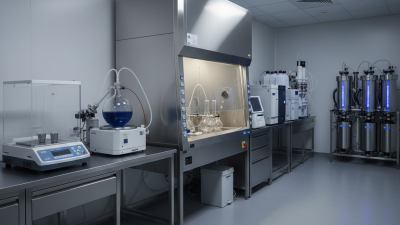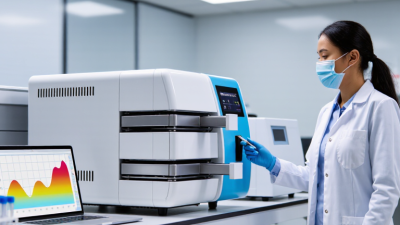
Buying Biology Equipment is a decision about dependable results, not simply a choice between brands. The right instrument should fit the work, the users, and the laboratory’s daily conditions. A microscope may look impressive in a catalog, yet feel awkward during repeated bench work. Small details matter: objective quality, stage movement, cleaning access, and service availability.
Louis Pasteur, the microbiologist, famously said, “Chance favors the prepared mind.” His words are a useful reminder for laboratory buyers: careful preparation can prevent avoidable surprises. Compare specifications against real procedures, not just headline features. Check what consumables the instrument requires, how long delivery may take, and whether staff can receive practical training. Ask for evidence. A low purchase price can hide higher costs for maintenance, replacement parts, or downtime. Still, even a thorough checklist cannot predict every problem.
A polished catalog can mislead. This guide introduces ten practical buying tips for global buyers, from defining application needs to assessing support and total cost of ownership. It will help readers ask sharper questions about calibration, compatibility, warranty terms, and supplier responsiveness. Before ordering, confirm that the equipment suits the intended workload and that its documentation is clear. Not every laboratory needs the most advanced model. Some need a simpler, sturdier instrument that is easier to maintain. The aim is a considered purchase, not a perfect one; buyers should revisit assumptions when needs change. Details matter.

Define the sample before comparing instruments. Whole blood, tissue sections, microbial cultures, and purified DNA need different handling and detection limits. Write down sample volume, viscosity, sterility needs, and any temperature-sensitive steps. Then estimate daily and peak workloads. A microscope used for twenty slides per shift has different needs from one supporting hundreds. Check whether stated throughput includes loading, cleaning, and repeat runs. It often doesn’t.
Tip: Request a test using your own sample matrix. Compare recovery, precision, and run time across the full measurement range, not just the ideal midpoint. For a balance, include the smallest routine mass. For a reader, include low and high signal samples. Leave room for growth, but avoid paying for capacity your team cannot use.
UNESCO’s Science Report 2021 notes that global research and development spending rose from about 1.7% of GDP in 2014 to 1.8% in 2018. This is context, not a sizing formula. For global procurement, record the test method, units, environmental conditions, and acceptance limits in writing. The WHO Laboratory Biosafety Manual, fourth edition, also recommends risk assessment suited to the work and equipment. One detail is easy to overlook: a technically capable instrument may still underperform when local power, room temperature, or operator training differs from the test site. That deserves a second look.
Compare accuracy and precision as separate specifications. Accuracy describes how close a result is to the accepted value; precision describes how closely repeated results agree. A device can be precise yet consistently off target. Check the stated test method, measurement range, and tolerance, not just the largest accuracy figure. For a balance, ask how performance changes near the loads your team actually weighs. Small print matters.
Temperature uniformity deserves the same scrutiny. An incubator may display one setpoint while shelves experience small temperature differences. Look for uniformity data measured across the working chamber, under a defined load, and after the unit stabilizes. Ask whether the test reflects frequent door openings or a nearly empty chamber. Those conditions change performance. A neat specification may not capture a busy workday.
Capacity should mean usable capacity, not simply the chamber’s advertised volume. Check shelf dimensions, spacing, airflow clearance, and the number of vessels that fit without blocking circulation. A larger unit can be less useful if containers crowd the shelves. It is easy to overestimate needs from current workloads; future projects are uncertain, too. Compare models using the same operating conditions and record which limits affect daily work. That comparison is rarely perfect. Keep the assumptions visible.
Before requesting quotations, identify the laboratory’s role. ISO/IEC 17025:2017 addresses the competence of testing and calibration laboratories; ISO 15189:2022 covers medical laboratory quality and competence; ISO 20387:2018 applies to biobanking. They are not interchangeable. Map each instrument to the standard’s relevant processes, records, and risk controls.
For an ISO/IEC 17025 lab, check calibration traceability, measurement range, and uncertainty—not just the display’s stated accuracy. For ISO 15189, assess sample handling, maintenance records, and temperature alarms. A centrifuge’s readable service log matters. So does a freezer alarm that remains visible after a power interruption. ISO 20387 buyers should examine how equipment supports sample identification, storage conditions, and documented handling.
The WHO’s 2022 Global Report on Infection Prevention and Control reports that about 7 in 100 patients in acute-care hospitals in high-income countries, and 15 in 100 in low- and middle-income countries, acquire at least one healthcare-associated infection. This does not show that equipment alone prevents infection. It does support careful review of cleanability, contamination controls, and maintenance. Small details matter. Ask for validation evidence, calibration intervals, alarm tests, and operator training records before purchase. I would still challenge one assumption: a compliant instrument does not make an entire workflow compliant. A checklist can miss that.
| # | Buying Tip | Equipment Examples | What to Evaluate | Relevant Standard Context | Checks Before Purchase |
|---|---|---|---|---|---|
| 1 | Define the intended use and required performance first. | Balances, pipettes, centrifuges, incubators, analytical instruments | Match capacity, measurement range, resolution, accuracy, throughput, and operating conditions to the test or process. Set acceptance criteria from the method and risk assessment. | ISO/IEC 17025:2017; ISO 15189:2022; ISO 20387:2018 | Document the intended use, critical specifications, applicable methods, and user requirements before comparing models. |
| 2 | Check calibration and metrological traceability arrangements. | Balances, thermometers, pipettes, pressure gauges, analytical instruments | Confirm which measurements require calibration, the available calibration range and uncertainty, and whether results can be linked through a documented calibration chain to appropriate references. | ISO/IEC 17025:2017; ISO 15189:2022 | Request calibration documentation and identify who will perform initial and ongoing calibration. A calibration certificate alone does not guarantee suitability for the intended use. |
| 3 | Plan equipment qualification and method verification. | Thermal cyclers, spectrophotometers, incubators, automated analyzers | Determine what installation, operational, and performance checks are needed, and how the equipment will be shown to work as intended within the laboratory’s process. | ISO/IEC 17025:2017; ISO 15189:2022; ISO 20387:2018 | Ask for installation requirements, test procedures, acceptance criteria, and the records supplied after installation. Assess whether local method verification or validation is needed. |
| 4 | Assess environmental control and monitoring needs. | Refrigerators, freezers, incubators, environmental monitoring systems | Compare usable capacity, temperature uniformity, recovery after door opening, alarm functions, and monitoring capability against validated storage or process requirements. | ISO 15189:2022; ISO 20387:2018; ISO/IEC 17025:2017 | Specify the required operating range and monitoring approach. Confirm alarm notification, data retention, backup arrangements, and response procedures for excursions. |
| 5 | Review serviceability, maintenance, and downtime risk. | Centrifuges, biosafety cabinets, autoclaves, analyzers, cold-storage equipment | Evaluate preventive-maintenance intervals, service access, spare-parts availability, repair options, and the effect of equipment failure on testing or sample integrity. | ISO/IEC 17025:2017; ISO 15189:2022; ISO 20387:2018 | Obtain a maintenance schedule and service plan. Identify critical equipment, contingency capacity, and how out-of-service equipment will be controlled. |
| 6 | Verify software, data handling, and connectivity. | Instrument software, laboratory information systems, temperature loggers | Check data export, audit-trail availability where applicable, user access controls, time synchronization, backup options, and compatibility with laboratory workflows. | ISO/IEC 17025:2017; ISO 15189:2022; ISO 20387:2018 | Test representative data flows before purchase. Define responsibilities for software configuration, access management, backup, and any required validation. |
| 7 | Consider biosafety, cleaning, and contamination control. | Biosafety cabinets, centrifuges, refrigerators, liquid-handling equipment | Evaluate containment needs, cleanability, material compatibility, aerosol-control features, and the ability to keep workflows separated where required. | ISO 15189:2022; ISO 20387:2018; ISO/IEC 17025:2017 | Match the equipment to the biological risk assessment and applicable local regulations. Confirm cleaning and decontamination instructions for the intended materials. |
| 8 | Check facility, utility, and regional compatibility. | Autoclaves, freezers, incubators, analytical instruments | Confirm electrical supply, plug and frequency, heat output, ventilation, water quality, drainage, floor loading, and available laboratory space. | ISO/IEC 17025:2017; ISO 15189:2022; ISO 20387:2018 | Review installation drawings and site-preparation requirements. For international procurement, confirm local electrical and safety requirements and access to qualified service. |
| 9 | Compare total cost of ownership, not just purchase price. | All equipment, including instruments with consumables or service contracts | Include installation, training, calibration, maintenance, consumables, energy use, software fees, shipping, and expected downtime in the comparison. | Applies to equipment planning under all three standards | Request itemized quotations and clarify warranty coverage, service response terms, consumable availability, and any recurring charges. |
| 10 | Check supplier documentation and staff training support. | All equipment used for testing, medical examinations, or biological-material processing | Assess the completeness of operating instructions, maintenance guidance, safety information, training materials, and records needed for controlled use. | ISO/IEC 17025:2017; ISO 15189:2022; ISO 20387:2018 | Confirm that manuals and training are available in a usable language and that staff competency, equipment identification, maintenance, and incident records can be maintained. |
Note: These standards set requirements for laboratory competence and controlled operations; they do not prescribe specific equipment models. Select equipment according to the laboratory’s scope, validated methods, risk assessment, and applicable local regulations.
A low purchase price can hide expensive biology equipment. Compare the full cost across its expected working life, not just the quotation. For a benchtop centrifuge, include rotor replacement, tube compatibility, and routine inspection. A small mismatch in consumable sizes can create recurring waste. Ask suppliers for annual consumable estimates based on your sample volume, and check whether common parts are easy to source in your region.
Calibration is another ongoing cost. Review the recommended schedule, the cost of each visit, and whether calibration requires shipping equipment away. That downtime matters when sample batches have fixed deadlines. Service coverage also deserves careful checking: request response-time estimates, travel charges, and the price of commonly replaced parts. Written service terms are more useful than a reassuring conversation. Still, estimates can be wrong; local access and actual use change the picture.
Energy use adds up in rooms where equipment runs day and night. Compare rated power, standby consumption, and any cooling or ventilation needs. A freezer’s electricity cost may look modest per month, but it compounds over several years. Record your facility’s electricity rate and expected operating hours before comparing models. Keep a little budget for surprises. Maintenance records from similar equipment at your site can improve estimates, though they may not predict every failure.
A biology instrument can look ready on a sales page and still fail at installation. Check its nameplate for input voltage, frequency, and power draw; a plug adapter does not convert voltage. IEC 60038 specifies standard supply voltages, but local site conditions and outlet types still need confirmation. Ask for the correct regional configuration before shipment. Small details matter. For equipment requiring water or drainage, verify those utilities too: the WHO/UNICEF 2020 global progress report estimated that one in four health-care facilities lacked basic water services. A laboratory’s own infrastructure may differ, so confirm it directly.
Tips: Request a photo of the nameplate and the exact regulatory marking supplied for your destination. Confirm whether the marking applies to the complete instrument and its accessories, and ask what documents accompany the shipment. Check that the warranty covers local labor, shipping, and replacement parts—not just the device. Get response times in writing.
Local support can determine whether a minor fault becomes weeks of downtime. Ask who performs repairs, where spare parts are held, and whether remote troubleshooting is available in your time zone. Verify the warranty start date; it may begin at shipment rather than installation. I would not assume a distributor’s presence means trained service is available. Have the supplier name the nearest qualified technician and describe the escalation process before purchase.
These examples show nominal single-phase mains voltage; actual supply and frequency can vary. Before ordering, compare the equipment’s rated input range and frequency with the installation site. Also confirm applicable regulatory marking, written warranty coverage, and access to local technical support.