Choosing Gel Electrophoresis Equipment is not just a price comparison. Lab teams need dependable power supplies, clear imaging, compatible chambers, and replacement parts that arrive on time. One failed run can waste prepared samples and an afternoon. Grand View Research’s electrophoresis market analysis tracks demand across research, diagnostics, and biotechnology applications. Market growth alone proves little. Bench-level reliability matters more. Thermo Fisher Scientific’s technical guidance emphasizes matching gel format, buffer conditions, and voltage to the application. These practical details shape a useful supplier comparison.
This guide reviews seven suppliers by product range, published specifications, service access, documentation, and total ownership costs. It also considers whether catalog claims are supported by manuals, warranty terms, and accessible technical support. Small details count. A stable power supply should offer suitable voltage control and clearly stated safety features. Imaging systems should produce readable bands without forcing labs into oversized packages. Supplier fit varies by workload, budget, and local service coverage. Some comparisons remain imperfect because public service data is uneven. Market reports show broad trends, but they cannot reveal whether a lid seals smoothly or a local engineer responds quickly. Check the details. Treat the rankings as a starting point, then verify current specifications and service terms directly with each supplier.
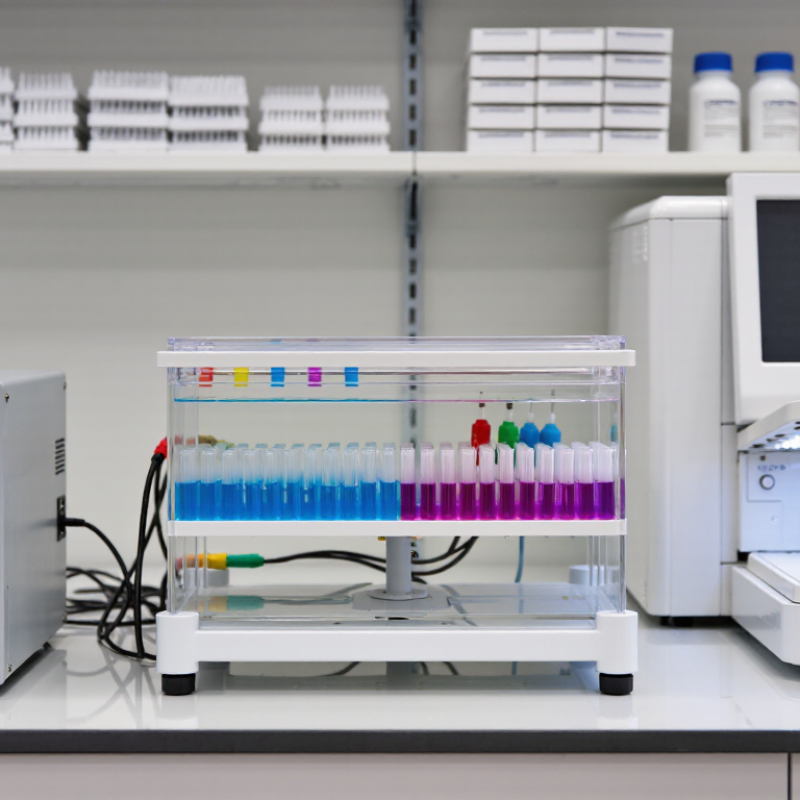
Gel electrophoresis equipment is more than a tank and a power supply. A typical setup includes a casting tray, end gates, combs, an electrophoresis chamber, and a regulated power supply. The comb creates wells; the tray holds the gel as it sets. During a run, buffer surrounds the gel and carries current. Small details matter: a loose gate can leak, while an unsuitable comb may leave wells too shallow for the sample. Not glamorous. Still important.
The equipment also depends on the gel and the job. Agarose gels commonly separate DNA fragments, while polyacrylamide systems are used for smaller molecules and proteins. After separation, a transilluminator or gel documentation system helps users view and record bands; compatible imaging accessories and protective shields may be needed. Grand View Research’s 2024 electrophoresis market report estimated the global market at about US$2.4 billion in 2023 and forecast continued growth through 2030. That figure covers electrophoresis broadly, not gel equipment alone. When comparing suppliers, check voltage range, chamber capacity, replacement-part availability, and whether trays and combs fit the unit. I would not assume “universal” parts always fit.
Evaluate suppliers by how well their equipment fits your lab’s actual workflow, not by catalog claims alone. Check compatibility across the power supply, tank, trays, combs, and available gel sizes. Confirm voltage range, run capacity, lid design, and whether replacement parts remain available. Details matter. A comb that leaves uneven wells or a tray that leaks can waste samples and staff time. Ask for manuals, warranty terms, service response times, and clear troubleshooting guidance. If possible, request a demonstration using your routine gel format.
Look for evidence behind performance claims, such as documented quality checks and repeatable operating specifications. Ask how the supplier handles technical questions, damaged shipments, and discontinued components. Support should be practical: a technician who can identify a faulty lead is more useful than a broad promise of fast service. Compare total ownership costs, including consumables, repairs, and training, rather than purchase price alone. No supplier is perfect. A lower-cost system may suit a teaching lab but frustrate a busy research team. Be cautious with vague answers, and record what each supplier confirms in writing. One limitation is easy to miss: a polished demonstration may not reflect your daily workload.
Seven suppliers differ less by catalog size than by what they support at the bench. A 2023 Grand View Research report estimated the global electrophoresis market at about US$2.09 billion in 2022, with projected annual growth of 5.5% through 2030. That expansion makes fit and service worth checking, not just price. Common supplier types include full-line laboratory suppliers offering tanks and power supplies; gel-system specialists; power-supply makers; imaging-system suppliers; reagent and precast-gel suppliers; custom equipment manufacturers; and regional distributors. Their offerings may include casting trays, combs, safety lids, UV or blue-light viewers, and repair support. Some offer nearly everything. Others specialize.
Compare the equipment against your daily workflow. A teaching lab may need sturdy mini-gel tanks and simple controls. A core facility may value programmable voltage, clear run logs, and compatible imaging hardware. Ask suppliers about electrode replacement, warranty terms, spare-part lead times, and whether combs fit the supplied trays. These small details matter when a run is waiting. One caveat: supplier catalogs rarely reveal how easily equipment handles repeated, high-volume use. Request a demonstration or user references where possible.
Tips: Check the tank’s stated gel capacity and power output against your protocols. Confirm local service coverage before ordering. Inspect the lid and cables; loose connections are easy to overlook. Compare consumable costs over a year, not just the instrument’s purchase price.
This is a non-ranked comparison of seven anonymized supplier profiles. Equipment formats and operating ranges below are representative of commonly available laboratory configurations, not specifications for a particular supplier or model; verify compatibility and limits in the product documentation.
| Supplier Profile | Representative Equipment Offering | Typical Format or Capacity | Common Operating Range | Typical Applications and Selection Notes |
|---|---|---|---|---|
| Supplier 1 | Mini horizontal agarose gel electrophoresis system | Small-format tray, commonly around 7 × 7 cm or 10 × 7 cm; combs often provide multiple sample wells | Usually run at approximately 70–150 V, depending on the chamber, gel, and protocol | Routine separation of DNA or RNA fragments. A practical choice for teaching labs and lower-throughput workflows; check whether the tray, comb, casting dams, and power supply are included. |
| Supplier 2 | Mid-size horizontal agarose gel electrophoresis system | Common tray formats include approximately 10 × 10 cm and 10 × 15 cm; configurations vary by chamber | Typically compatible with laboratory power supplies operating in the 70–150 V range | Useful for routine nucleic-acid analysis when a mini system offers insufficient lane capacity. Confirm gel-tray dimensions and comb compatibility before purchasing replacements. |
| Supplier 3 | Wide-format horizontal gel system | Larger trays commonly range from about 15 × 15 cm to 20 × 20 cm, with higher lane capacity than mini systems | Run voltage is protocol- and chamber-dependent; many workflows use roughly 70–150 V | Suited to higher-throughput sample screening or larger gels. Larger trays require more buffer and bench space, and may need longer run times than small-format systems. |
| Supplier 4 | Mini vertical polyacrylamide gel electrophoresis system | Commonly accommodates one or more mini gels; plate dimensions and gel count depend on the cassette design | Often used with power supplies capable of approximately 100–200 V; follow the gel and apparatus instructions | Used for protein separation, including SDS-PAGE. Check plate thickness, spacer dimensions, comb format, and whether the system supports hand-cast gels, precast gels, or both. |
| Supplier 5 | Large-format vertical protein electrophoresis system | Designed for larger gel plates or multiple gels; exact capacity is apparatus-specific | Operating conditions vary with gel size and method; select a supply with adequate voltage and current capacity for the intended setup | Appropriate for higher sample throughput or larger gel formats. Compare cooling requirements, plate-handling workflow, and compatibility with the lab’s transfer equipment. |
| Supplier 6 | Programmable electrophoresis power supply | Output capacity varies; common laboratory units offer selectable constant-voltage, constant-current, or constant-power modes | Many general-purpose units cover ranges such as 10–300 V, but current and power limits differ by model | Can support horizontal or vertical electrophoresis when its output matches the apparatus requirements. Check output terminals, number of simultaneous connections, safety features, and overload protection. |
| Supplier 7 | Gel documentation and nucleic-acid visualization equipment | Systems range from compact blue-light viewers to enclosed imaging stations with cameras and image-capture software | Illumination and filter options depend on the detection chemistry; select the configuration for the stains and labels used | Used to visualize and document electrophoresis results. Check dye compatibility, camera resolution, enclosure and eye-safety features, and whether image analysis software is included. |
Comparing gel electrophoresis equipment suppliers begins with the work a lab actually performs. Check whether the power supply supports the voltage range and run times your protocols require. Confirm that chambers accept the gel sizes and combs already in use. Small details count. A mismatched tray can slow a busy teaching lab or disrupt a routine assay.
Support can matter as much as hardware. Ask how quickly suppliers respond, whether setup guidance is included, and how replacement parts are handled. Clear manuals and practical training help new users avoid uneven wells, overheated buffers, or confusing run results. The comparison is not always tidy: a lower quote may exclude accessories, shipping, or service. Request an itemized estimate and compare the full operating cost, not just the instrument price. Also consider delivery timelines and whether consumables remain easy to source. I would not assume the most feature-rich system is best; extra capacity may sit unused. A short trial, detailed specifications, and candid conversations with current users can reveal gaps that a polished catalog cannot.
Use these example planning weights to compare suppliers consistently: prioritize technical fit and reproducibility, then service and consumable availability. The percentages are suggested decision weights—not measured supplier scores or market research—and should be adjusted to your lab’s needs.
Choosing a gel electrophoresis supplier starts with your lab’s actual workload. Match the system’s gel tray size, sample capacity, and voltage range to your protocols. Check that combs, casting accessories, and compatible power supplies are easy to obtain. Ask for clear specifications, user manuals, and safety information before placing an order. Details matter.
Reliable support is as important as the equipment itself. Ask how quickly the supplier responds to technical questions and whether staff can help troubleshoot uneven bands, leaks, or power issues. Confirm warranty terms, replacement-part availability, and what happens if a unit arrives damaged. A polished catalog is not proof of dependable service. Request a demonstration or references from laboratories with similar needs when possible.
Compare the full cost, including accessories, delivery, training, and future consumables—not just the listed instrument price. Check whether the equipment fits your bench space and whether setup instructions are practical for your team. One detail is easy to overlook: a low-cost system may require accessories that are sold separately. I would still verify those details in writing; supplier pages can be vague, and that deserves a second look.